
Last updated November 15, 2026
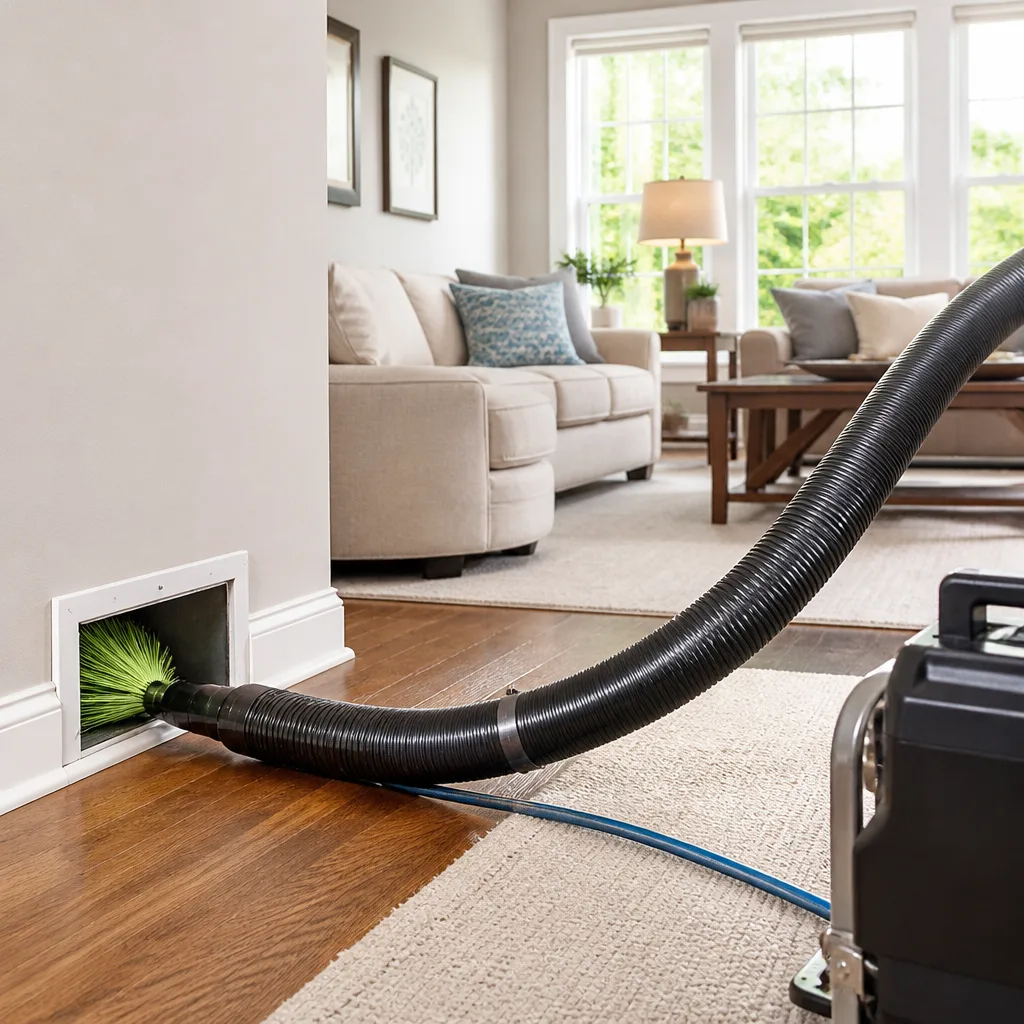 Whole-home duct cleaning
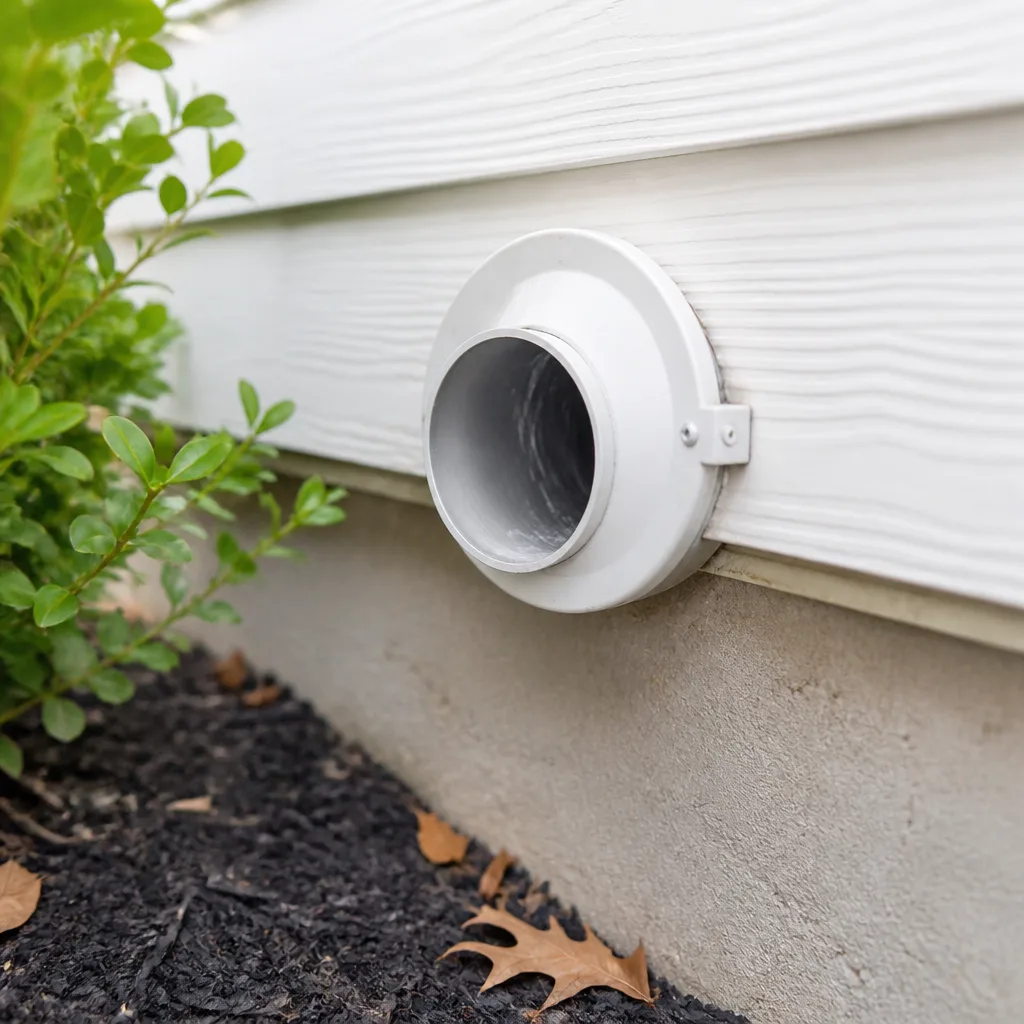 Dryer vent cleaning
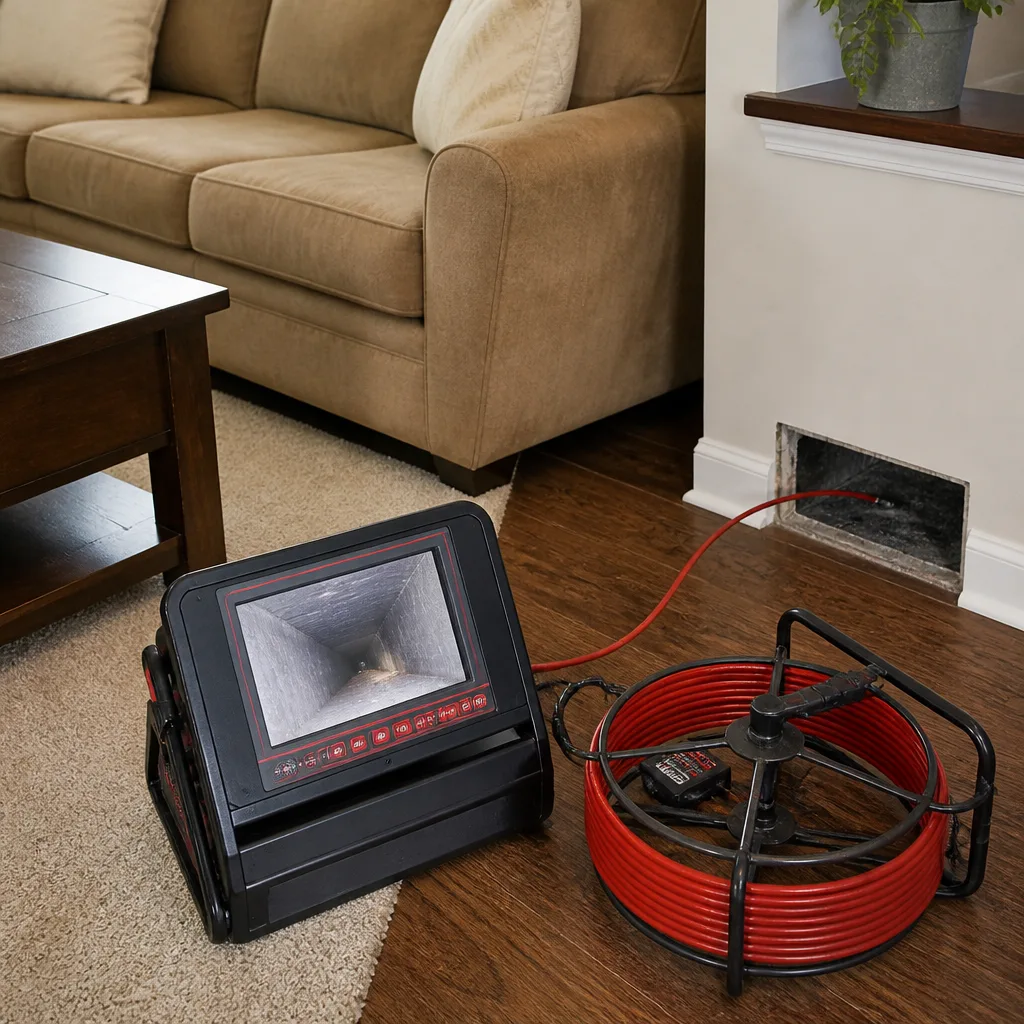 Camera inspection
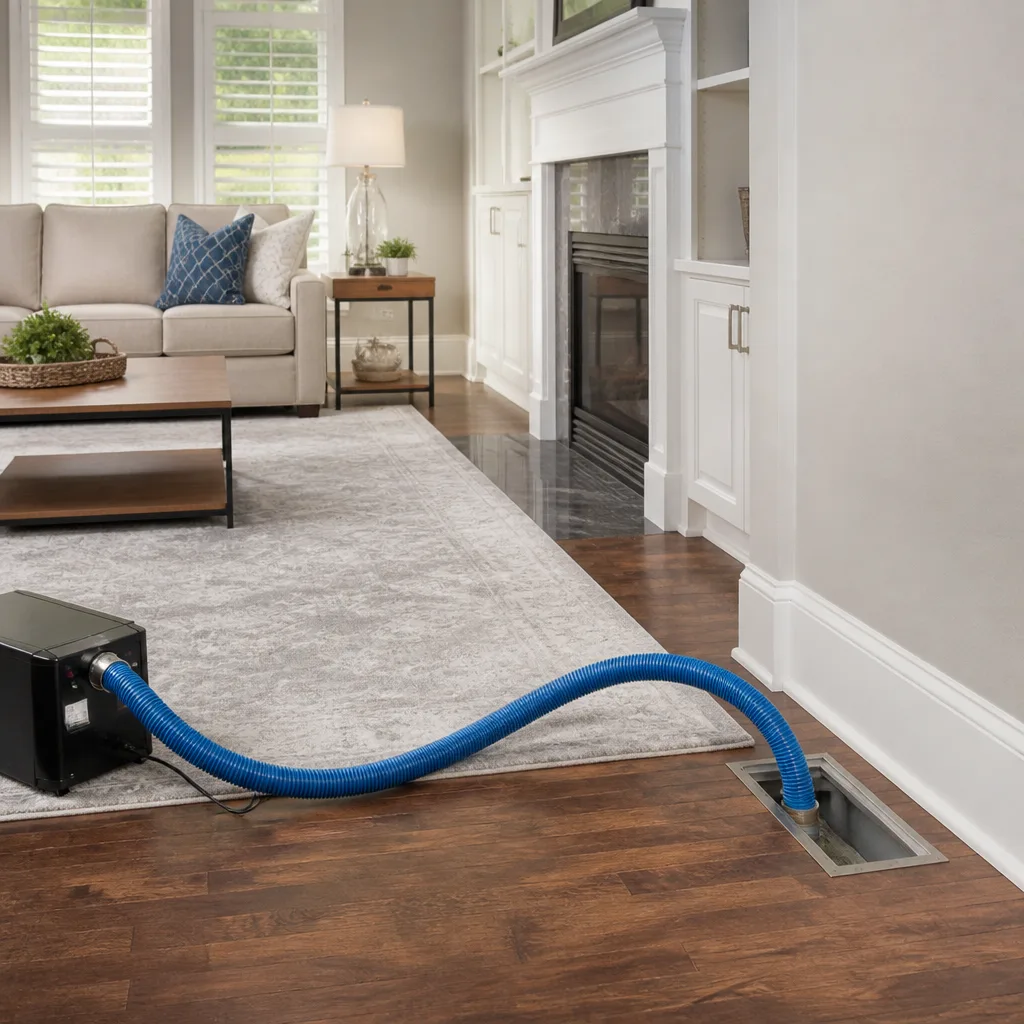 Sanitizing & deodorizing
Whole-system duct and dryer vent check with before-and-after photos - you see exactly what came out of your vents
That "$99 whole-house special" is a bait ad - the real number appears once they are in your hallway, or the "clean" is a shop-vac at the register. We photograph the inside of your ducts before and after instead.
Seasonal Air Duct Cleaning Care for Clarksville: Year-Round Homeowner’s Guide
Most homeowners treat duct cleaning as a once-a-year checkbox. In Clarksville, that approach leaves money and air quality on the table. This city sits in a climate band with four genuinely different stress conditions for a duct system: a heavy spring pollen load, a humid summer that pushes cooling run time hard, a fall leaf-and-debris season that loads outdoor intakes, and a winter heating cycle that changes how air moves through the whole system. Each season asks something different of your ducts, and a single annual cleaning scheduled at the wrong time can miss all four. This guide maps maintenance tasks to the Clarksville calendar so you get real value from the work, not a stranger with a vacuum and a coupon.
Quick Answer
The best time to schedule professional air duct cleaning in Clarksville depends on which problem you’re solving. Late winter, before the February-to-May oak and cedar pollen season peaks, is ideal for allergen-driven households, while early fall is the better window if your main concern is dust and debris from cooling season. Most Clarksville homes benefit from a full cleaning every two to four years, with filter upgrades and inspections in between. Seasonal care is about timing the right task to the right month.
Styles & brands we work with
- Whole-home duct cleaning
- Dryer vent cleaning
- Camera inspection
- Sanitizing & deodorizing
Table of Contents
- Why Clarksville Ducts Face Four Different Seasons of Stress
- Spring: Pre-Pollen Preparation and Filter Strategy
- Summer: Humidity, Coil Performance, and Cooling Load
- Fall: Intake Debris, Mode Switching, and the Debris Dislodge Problem
- Winter: Heating Run Time and Heat Exchanger Awareness
- Shoulder Seasons: Condensation Risk Inside Ducts
- When to Schedule Professional Cleaning for Maximum Value
- Common Mistakes to Avoid
Why Clarksville Ducts Face Four Different Seasons of Stress
Clarksville’s position in the Mid-South means the city gets real winters, real summers, and a spring pollen season that ranks among the heaviest in the region. That combination is harder on duct systems than a mild coastal climate or a dry desert one, because the system is asked to handle very different particle loads and moisture conditions within a single year. A duct that stays clean in February can be loaded with pollen by April. The same duct that handles summer humidity well can develop condensation problems in October when supply air temperature and attic temperature cross in ways they don’t in July.
What we see in ductwork around Clarksville falls into a few predictable patterns based on neighborhood and home age. Older homes with original galvanized ductwork tend to have more seam leakage and internal debris accumulation. Newer builds often have flexible duct runs that trap debris at elbows and transitions. Homes near the Fort Campbell corridor deal with a different outdoor particle mix than homes closer to the Cumberland River, because wind patterns across the open terrain on that side of town carry soil and agricultural debris differently than the tree-heavy older neighborhoods closer to downtown.
The takeaway is simple. There is no single correct month to clean ducts in Clarksville. What works is a calendar that maps each task to the season producing the stress. The sections below walk through that calendar one season at a time.
Spring: Pre-Pollen Preparation and Filter Strategy
Clarksville’s oak and cedar pollen season runs February through May, and it’s one of the heaviest stretches in the Mid-South. If your ducts run through that entire window without preparation, they accumulate a full season’s particulate load before summer cooling even starts. The fix is to act in late January, before the first pollen counts climb.
Here’s the sequence that works best for Clarksville homes:
- Late January: upgrade the filter. Move to a higher-MERV filter before pollen season, but only one your system is rated to handle. Too high a MERV rating on a system not designed for it restricts airflow and stresses the blower. Familiarity with Honeywell and Aprilaire filtration systems helps here, because filter housings and cabinet designs vary and the wrong size or rating wastes money.
- Late January: check return grilles and registers. Remove and wash return grilles, and confirm none are blocked by furniture or rugs. Pollen that makes it into the return gets pulled straight into the system.
- March through May: hold the filter schedule. Change the filter more often during peak pollen, and keep windows closed on high-count days. This is when the system is working hardest on incoming particulate.
- Late May: evaluate whether a professional cleaning is due. If the filter loads fast or you notice dust at registers, the ductwork itself may be holding a season’s worth of material.
Spring is also the strongest argument for scheduling a full professional cleaning before the season, not after. Cleaning in late January or early February means you enter pollen season with a clean system and get the full benefit of every filter you buy. Cleaning in June means you’ve already absorbed the pollen load and your filters did the heavy lifting alone. For households with allergy concerns, the pre-pollen window is the highest-value cleaning slot on the Clarksville calendar. Our air duct cleaning work in this window uses Rotobrush and Nikro equipment that reaches into the duct runs where pollen and settled dust collect, not just the visible openings.
Summer: Humidity, Coil Performance, and Cooling Load
Clarksville summers bring heat and humidity that push cooling systems into long run times, and long run times pull more air through the ductwork. That’s good for filtration in one sense – more air changes – but it also means any debris in the ducts gets continuously re-suspended and pushed into living spaces. The bigger summer issue, though, is what humidity does inside the system.
Before July’s cooling peak, homeowners should have the following checked:
- Coil condition. A dirty evaporator coil reduces cooling capacity and raises run time, which in turn pulls more dust into the ducts. If your system is running longer than it used to, coil condition is one of the first things to check.
- Drain pan and condensate line. Summer humidity produces significant condensate. A slow or blocked drain keeps moisture in the system, and moisture plus dust equals biological growth inside ductwork.
- Duct insulation integrity. In Clarksville attics, summer temperatures climb high enough that compromised duct insulation causes condensation on the outside of the duct and heat gain inside it. Both hurt efficiency and both can introduce moisture.
- Air balance. Confirm that supply registers across rooms deliver reasonably even airflow. Uneven delivery usually signals a duct problem, not a thermostat problem.
The summer task most homeowners skip is the pre-summer inspection in May or June. Doing it before the cooling peak means any duct repairs or cleaning happen before the system is running its longest cycles. If you’re already seeing dust at registers, that’s a sign the ducts are loaded and the system is pushing it into rooms. A full cleaning removes the source, and where cleaning exposes failed connections or damaged duct sections, a duct cleaning Clarksville team that also handles repair means you don’t need a second contractor to fix what the cleaning found.
Humidity also affects how filtration performs. Whole-home systems using Honeywell or Aprilaire setups are designed to work alongside conditioned air, and when ductwork carries excess moisture or debris, the filtration system can’t do its job cleanly. Better air starts with clean ducts, and summer is when that relationship becomes most obvious.
Fall: Intake Debris, Mode Switching, and the Debris Dislodge Problem
Fall is when two things happen at once in Clarksville. Leaf and yard debris loads the outdoor environment, and the system switches from cooling mode to heating mode. That switch is more significant than most homeowners realize. Debris that settled inside the ductwork during the cooling season gets dislodged when airflow direction and velocity change with the heat cycle, and the first weeks of heating season can briefly worsen indoor air quality as that material gets stirred up and delivered to rooms.
Here’s what to do about it:
- October: inspect outdoor air intakes and return paths. Leaf debris, seed pods, and fine yard material can collect at intake points and get drawn in. Clear anything blocking intake screens and note whether debris is reaching the filter faster than usual.
- October: change the filter before the first heat run. The first few heating cycles will dislodge settled material, and a fresh filter catches more of it before it reaches rooms.
- Early November: run the heat and watch for a temporary dust spike. A brief increase in dust at registers during the first heat week is normal. A spike that lasts more than a week or two points to a loaded duct system that needs cleaning.
- November: schedule cleaning if the ducts haven’t been done in two or more years. Fall is the second-best cleaning window on the Clarksville calendar, after late winter.
Fort Campbell-area wind patterns make fall intake contamination different from spring. In spring, the dominant load is fine pollen carried on steady winds. In fall, the load is heavier debris – leaf fragments and soil particles – picked up by gusts across open ground and pushed toward intake points. That heavier material settles faster inside ducts and is more likely to cause visible dust at registers when dislodged. Homes on the open-terrain side of Clarksville should pay closer attention to intake conditions in October than homes in tree-dense older neighborhoods, where leaf material tends to drop rather than blow.
If cleaning exposes failed seals, disconnected runs, or crushed flex duct, that’s a repair issue, not just a cleaning one. A team that handles both is worth having. Our dryer vent cleaning work follows the same logic: fall is a good time to check the dryer vent, because lint accumulation over summer creates real fire risk.
Winter: Heating Run Time and Heat Exchanger Awareness
Winter in Clarksville means heating mode runs long, sometimes continuously on the coldest days. Long heating cycles push a steady volume of warmed air through the ductwork, and that’s when any remaining dust and debris in the system gets continuously circulated. Winter is also when a specific safety check deserves attention: the heat exchanger, if your system is a furnace.
We want to be direct about this. A cracked or compromised heat exchanger is a genuine safety concern, not a maintenance inconvenience. The combustion gases that can leak from a failed heat exchanger are dangerous, and this is not a component to inspect yourself. A trained HVAC technician should check it. What homeowners can do is watch for signals: unusual smells when the heat runs, soot or discoloration around the furnace, or a yellow rather than blue burner flame. Any of those warrants a professional call before continuing to run the system.
On the duct side, the winter tasks are:
- November: confirm return air paths are clear. Winter heating increases airflow demand, and blocked returns make the system work harder.
- December through February: hold filter changes on schedule. High run time means filters load faster in winter than in shoulder months.
- Midwinter: listen for new noises at registers. Rattling or whistling at registers often signals a duct connection that has loosened with seasonal expansion and contraction.
- Late winter: plan the pre-pollen cleaning. This is the natural handoff to spring preparation.
Winter is a good time to schedule Air Duct Repair work, because repair problems found during a cleaning are cheapest to fix before the spring pollen load arrives and before summer cooling stress begins. Where contamination levels are elevated, we also work with Abatement Technologies air-purification equipment to address air-quality and contamination scenarios beyond surface cleaning.
Shoulder Seasons: Condensation Risk Inside Ducts
The shoulder seasons in Clarksville – roughly late March through May, and September through October – are when duct condensation risk peaks. Here’s why. During cooling season, supply air is cold and attic temperatures are high, so condensation forms on the outside of poorly insulated ducts, not generally inside them. During shoulder seasons, attic temperatures swing dramatically between day and night, and supply air temperature can land close to the dew point inside the ducts themselves. When the duct surface temperature drops below the dew point of the surrounding air, moisture forms on the inside of the duct, and that’s the condition that supports biological growth.
The signs of duct condensation to watch for in Clarksville shoulder seasons:
- Musty or damp odors at registers, particularly in the morning after a cool night.
- Water staining on the outside of duct runs visible in the attic or crawlspace.
- Condensate in the drain pan that persists even when the system hasn’t run much.
- Rust or corrosion at metal duct joints, which points to repeated moisture exposure.
What to do: first, confirm duct insulation is intact, because most shoulder-season condensation traces back to compromised insulation or leakage at joints. Second, keep the system’s blower running a bit longer after a cooling cycle, which helps dry the ducts. Third, if you smell a persistent musty odor, the ducts may already have biological growth and cleaning is the right response. Shoulder seasons are also when duct repair work pays for itself most reliably, because fixing a small insulation gap in October prevents a moisture problem through the whole next year.
When to Schedule Professional Cleaning for Maximum Value
Timing matters as much as the cleaning itself. Here’s how to pick the best window for your Clarksville home:
- Late January or early February. Best for allergy-driven households. You get a clean system entering pollen season, and every filter you buy works harder. This is the single highest-value window for most Clarksville homes.
- September or October. Best if your main concern is debris from cooling season and the fall mode-switch dislodge problem. Cleaning before the first heat run keeps the dislodged material out of the air you breathe.
- Immediately after a renovation or major construction. Drywall dust and construction debris are far worse for ductwork than normal seasonal loading, and cleaning after the project finishes is the correct sequence.
- When you move into a home with unknown duct history. You can’t know what the previous owners did. A baseline cleaning establishes where things stand.
- When you notice dust, odors, or uneven airflow. Symptom-driven cleaning beats calendar-driven cleaning. If something’s off, get it looked at regardless of season.
How often in general? Most Clarksville homes do well with professional cleaning every two to four years. Homes with pets, allergy-sufferers, recent renovation, or long-neglected ductwork should clean closer to the two-year mark. Homes with newer, well-maintained systems and regular filter changes can stretch toward four. The honest answer is that no two homes are the same, which is exactly why we price per job by a written estimate rather than by the vent or by the hour.
One local note: schedule early. The late-January and early-fall windows fill up because they’re the smart windows, and homeowners who wait until they’re mid-allergy-season calling around find the good slots gone. Booking a few weeks ahead of your target window is the practical move.
Common Mistakes to Avoid
- Cleaning only once a year and calling it seasonal care. In Clarksville’s four-season climate, one cleaning scheduled without regard to timing misses the pollen window, the humidity window, and the dislodge window. Match the timing to the stress.
- Upgrading to the highest MERV filter available as a shortcut. A filter your system wasn’t designed for restricts airflow and stresses the blower. Match the filter to the system, not to a marketing number.
- Ignoring the first heating cycle of fall. That temporary dust spike is the duct system telling you it has material to remove. If it lasts more than a week or two, that’s a signal to get the system cleaned.
- Skipping the pre-pollen upgrade in late January. This is the single most-missed opportunity in Clarksville duct maintenance. Clean system plus upgraded filter entering February means every filter works harder for months.
- Treating dryer vent cleaning as optional. Lint buildup is the leading cause of residential dryer fires, and a long-neglected dryer vent is a fire risk waiting to be cleared. It’s a standalone safety service, not an add-on to think about later.
- Assuming a cleaning quote per vent is fair. Per-vent pricing rewards technicians for counting rather than cleaning. A flat price per system agreed in writing before work starts is the fairer arrangement and the one that protects you from the bait-and-switch reputation the industry has earned.
- Hiring a shop-vac crew because the price is lower. Consumer vacuums and low-powered shop vacs cannot reach the full duct run or capture fine particulate the way professional equipment does. Ask what equipment a company uses before you book.
See the difference
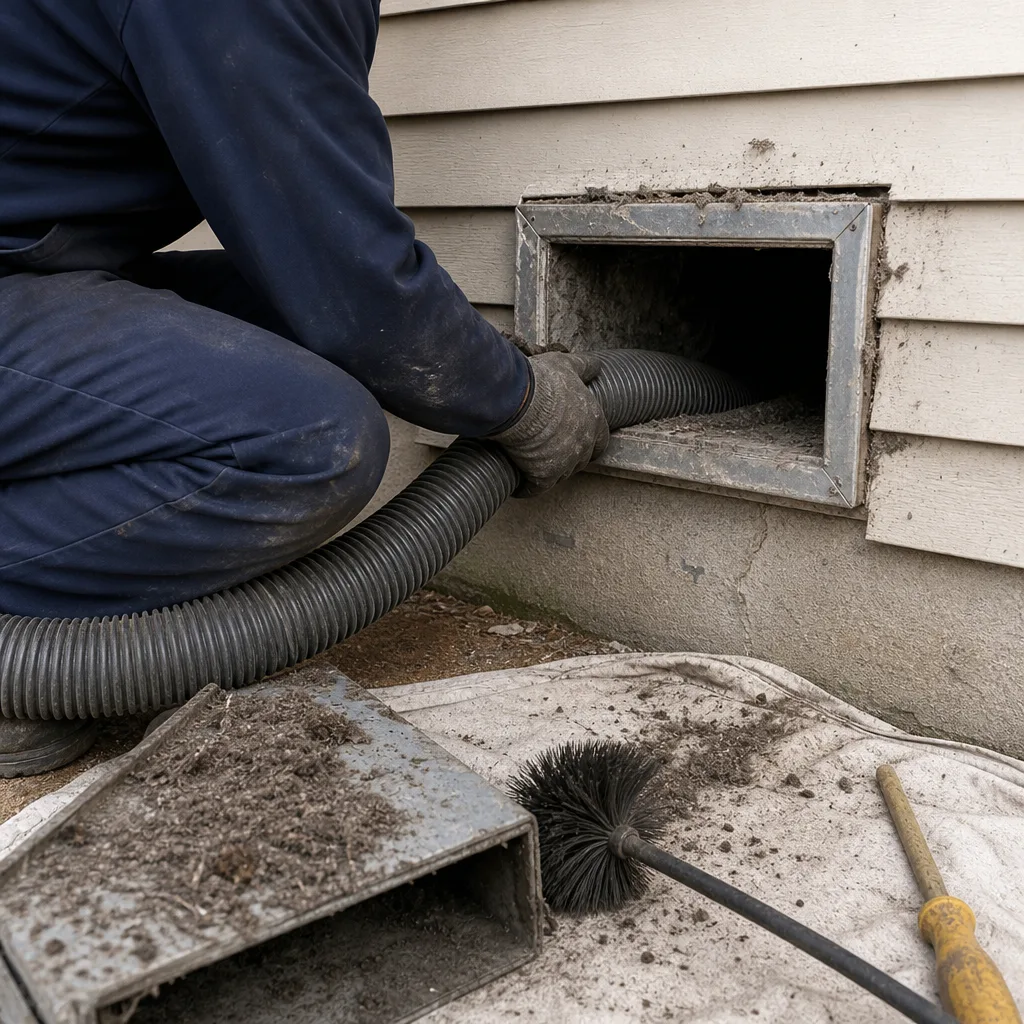 Before
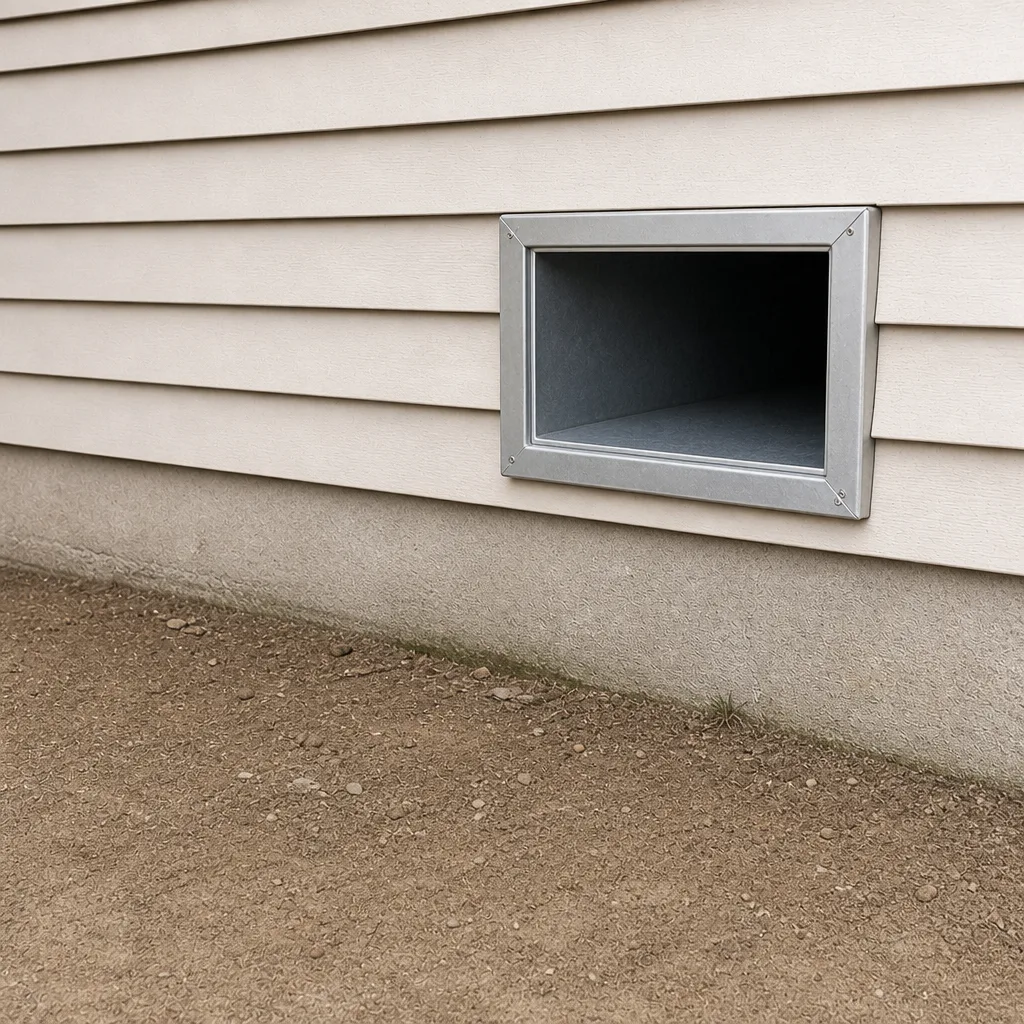 After
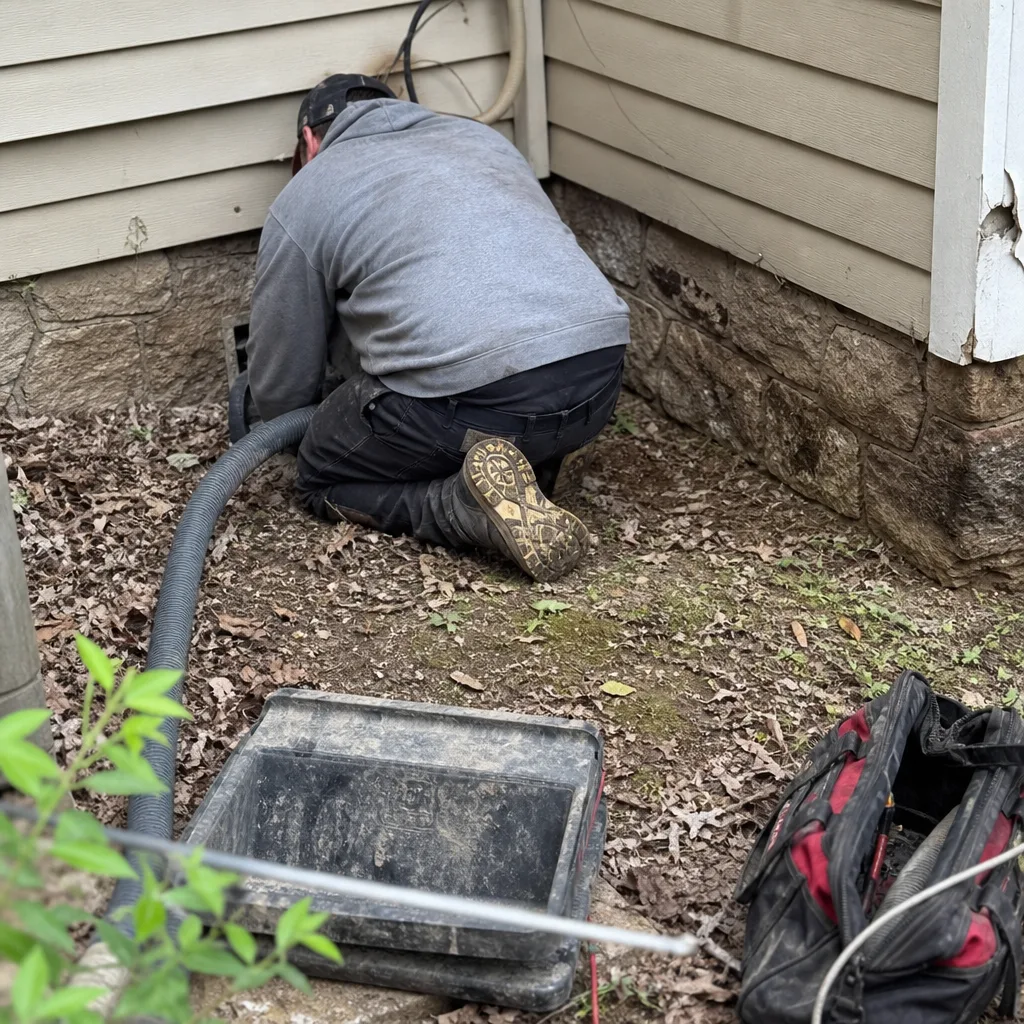 Before
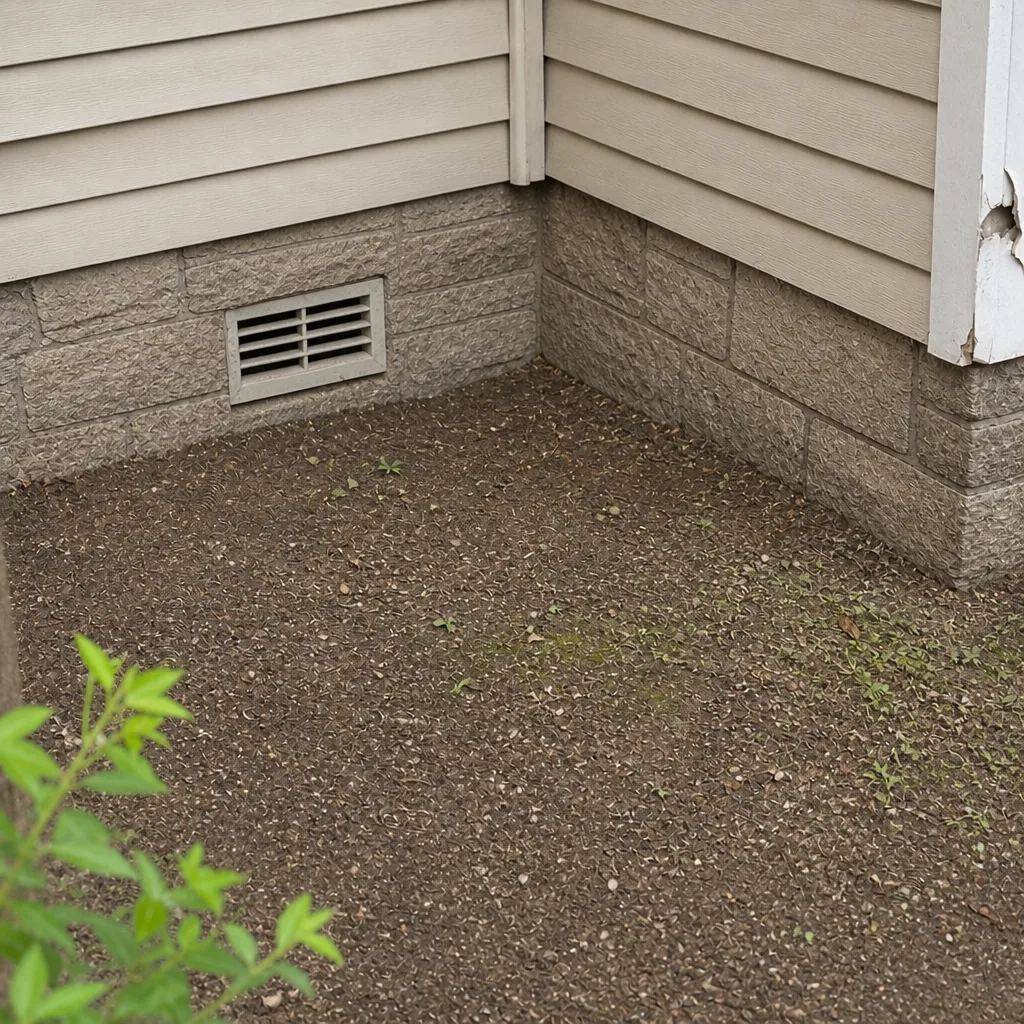 After
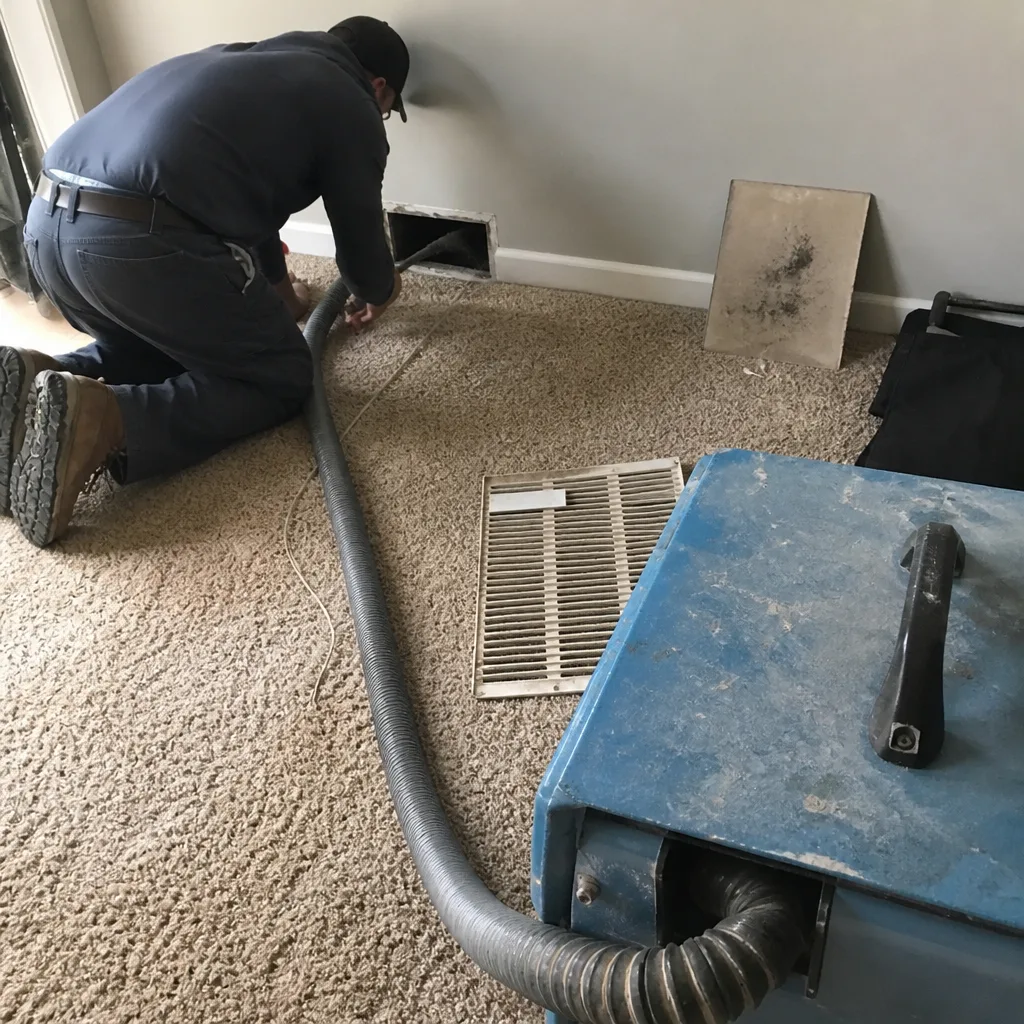 Before
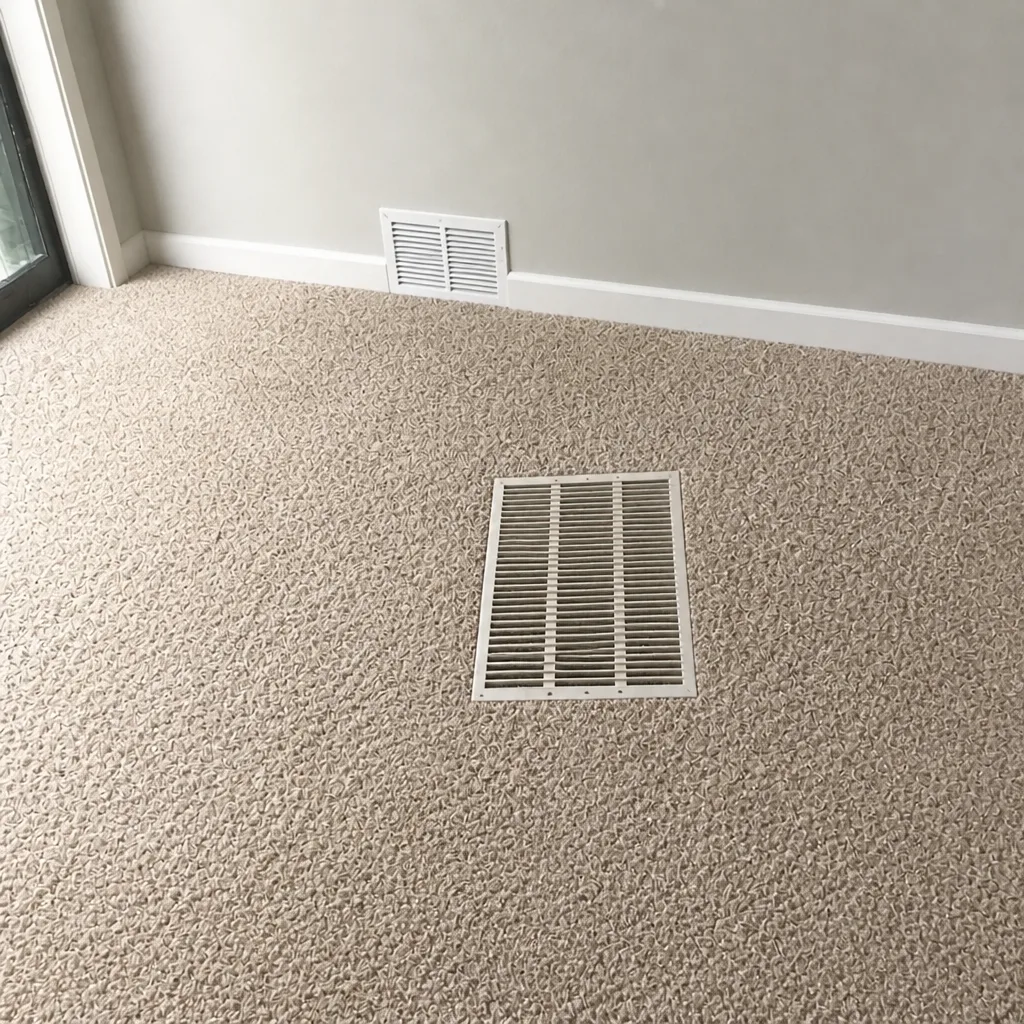 After
When to Call a Professional
Some duct issues are seasonal maintenance and some need a professional out. Call if you’re seeing a dust spike at registers that lasts more than a week or two after the fall heat switch, if you smell musty or damp odors at registers, if you’ve just finished a renovation, or if ductwork in your home has gone two or more years without cleaning. Call as well if you notice uneven airflow, rattling at registers, visible rust at duct joints, or a filter that loads far faster than it used to. If your furnace has never had its heat exchanger checked, that’s a professional call, not a DIY task. Duct Cleaning Clarksville offers free estimates in Clarksville, and our technicians have up to 13 years of experience. Call (833) 519-7736 to schedule.
Frequently Asked Questions
Most Clarksville homes benefit from professional cleaning every two to four years, timed to the season that matches your main concern. Homes with pets, allergy-sufferers, recent renovation, or long-neglected ductwork should clean every two years. Homes with newer systems and consistent filter changes can stretch toward four. Call (833) 519-7736 for an exact recommendation – estimates are free.
Late January or early February is the best window for allergy-driven households, because it gets you a clean system before the heavy oak and cedar pollen season peaks. Early fall is the second-best window, and it’s the right pick if your main concern is debris from the cooling season. Call (833) 519-7736 to book your window – estimates are free.
The switch from cooling to heating changes airflow direction and velocity, which dislodges settled dust and debris inside the ductwork and pushes it into rooms. A brief spike in the first week or two is normal. If it lasts longer, the ducts likely need cleaning. Call (833) 519-7736 for a free estimate.
Only if your system is rated for it. Upgrading to a higher-MERV filter before pollen season helps, but a filter your system wasn’t designed for restricts airflow and stresses the blower. Match the filter to your system’s spec, and if you have a Honeywell or Aprilaire housing, check the rating on the existing filter before buying a replacement. Call (833) 519-7736 if you want help identifying the right fit.
Condensation forms inside ducts when the duct surface temperature drops below the dew point of surrounding air. Clarksville’s shoulder seasons swing attic temperatures sharply between day and night, which is exactly when that condition occurs. Compromised insulation and loose joints make it worse. If you see moisture or smell mustiness at registers, call (833) 519-7736 for a free estimate.
Yes. Lint buildup is the leading cause of residential dryer fires, and it’s a standalone safety service worth scheduling on its own. Autumn is a sensible time to check it because lint accumulates over the summer, but any time the dryer is taking longer to dry a load is a reason to call. Call (833) 519-7736 for a free estimate.
The Bottom Line
Clarksville’s four distinct seasons ask four different things of your duct system, and one annual cleaning can’t answer all of them. The plan: upgrade the filter in late January before pollen season, verify coil and duct insulation before the July cooling peak, inspect intakes and prepare for the fall dislodge in October, and check the heat exchanger in November. Watch for shoulder-season condensation, schedule professional cleaning in late winter or early fall, and treat dryer vent cleaning as a fire-safety task rather than an afterthought. Call (833) 519-7736 for a free estimate. Our technicians have up to 13 years of experience, and we’ve got the professional equipment to handle the work the calendar asks for. We answer 24/7. Fast dispatch from 7am to 7pm, Sunday through Friday.
Written by the team at Duct Cleaning Clarksville.