
Last updated November 15, 2026
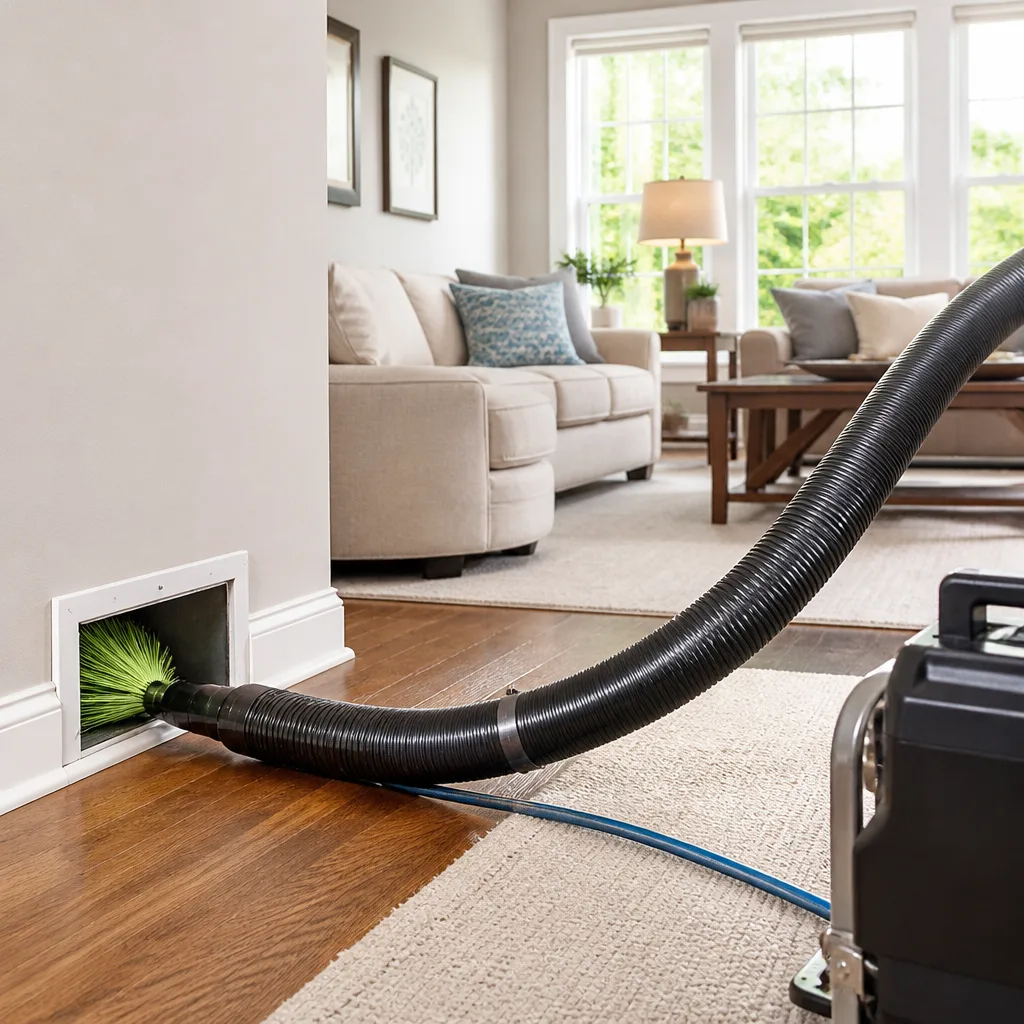 Whole-home duct cleaning
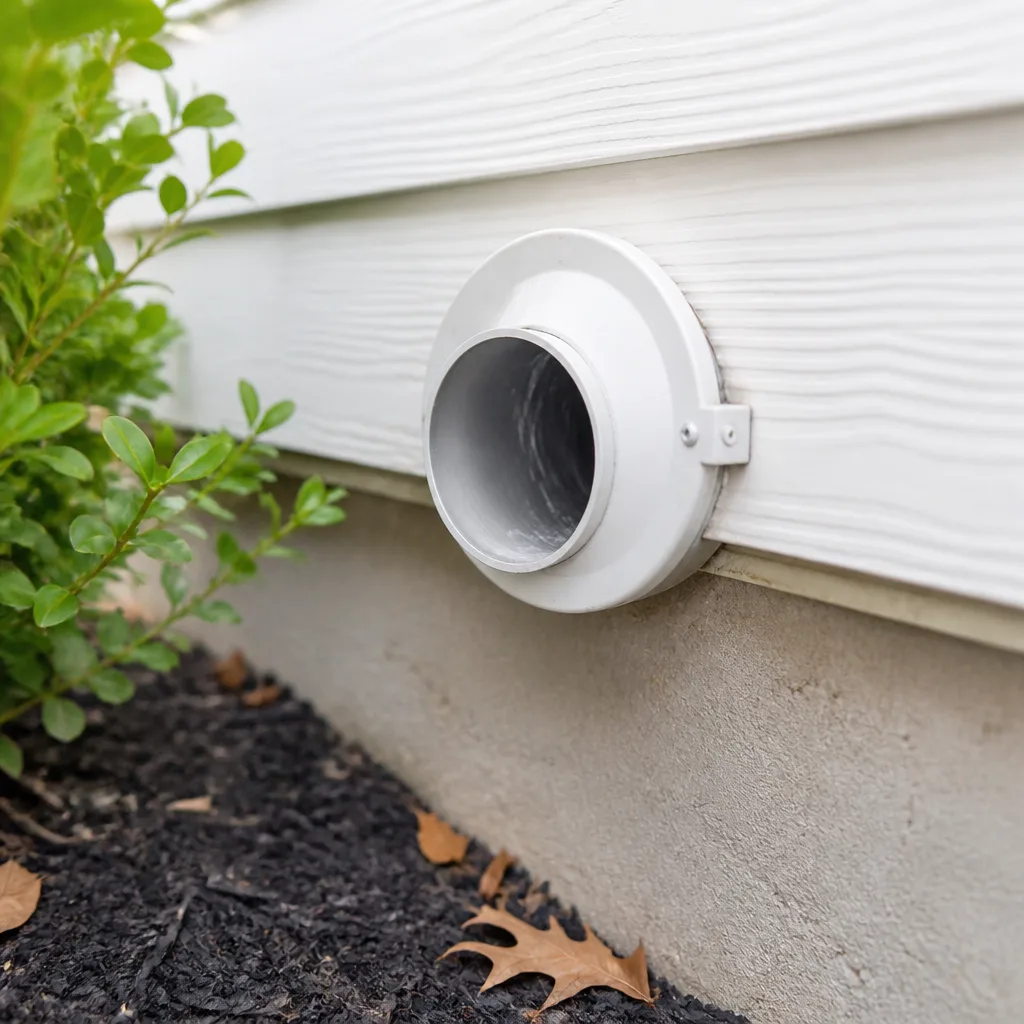 Dryer vent cleaning
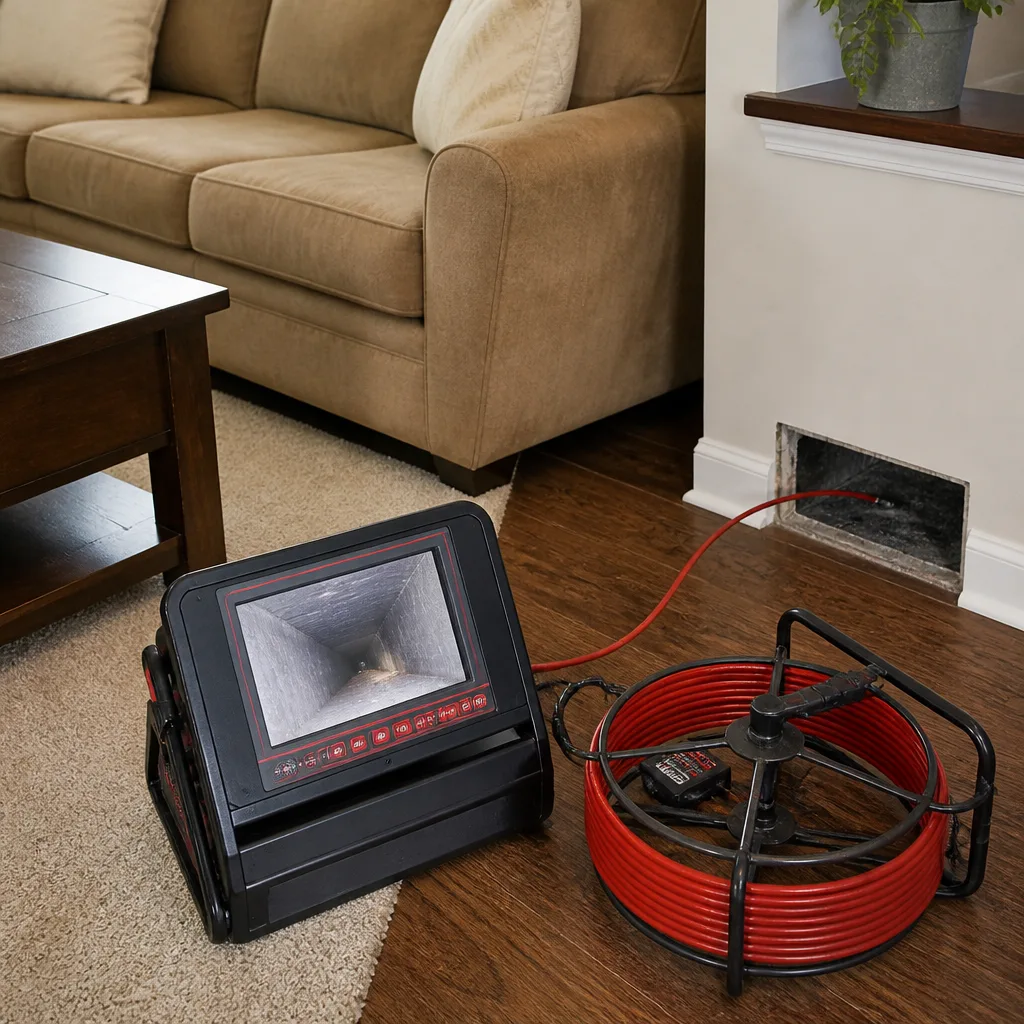 Camera inspection
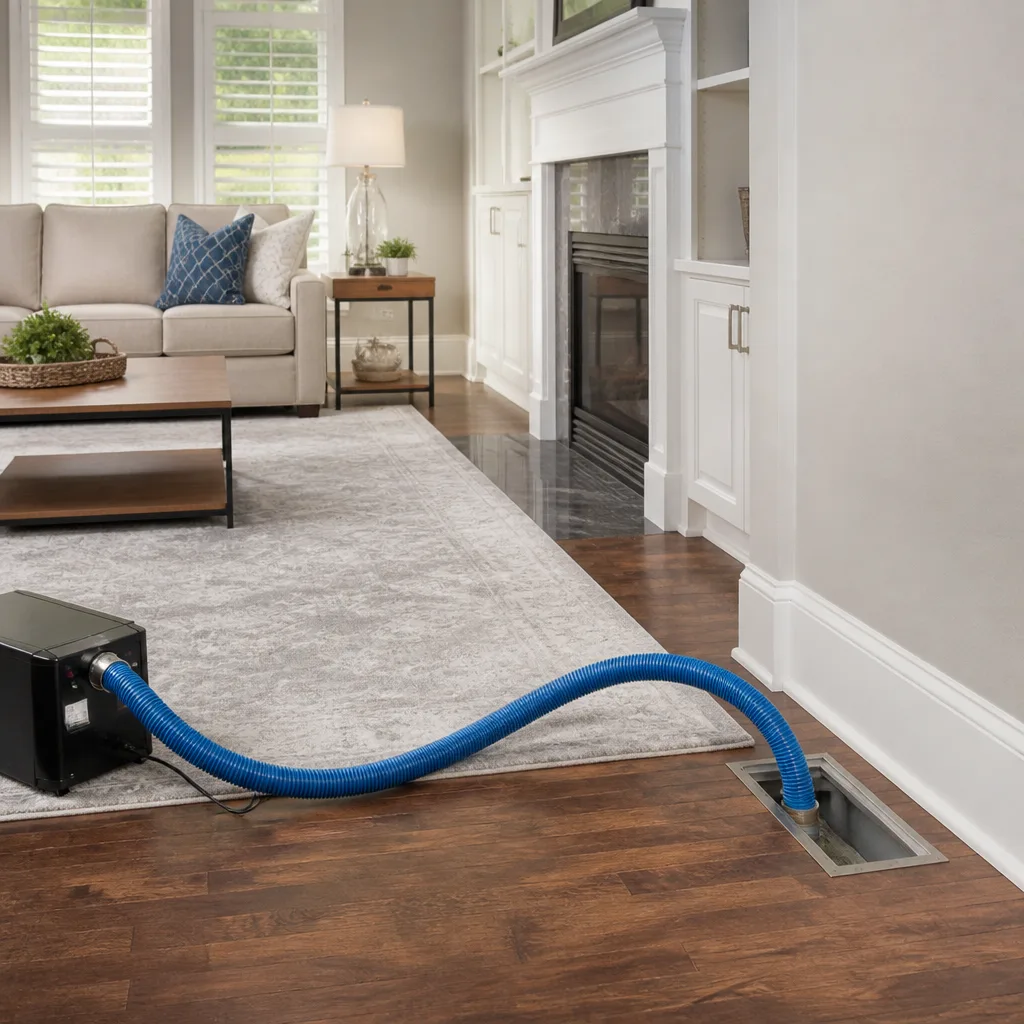 Sanitizing & deodorizing
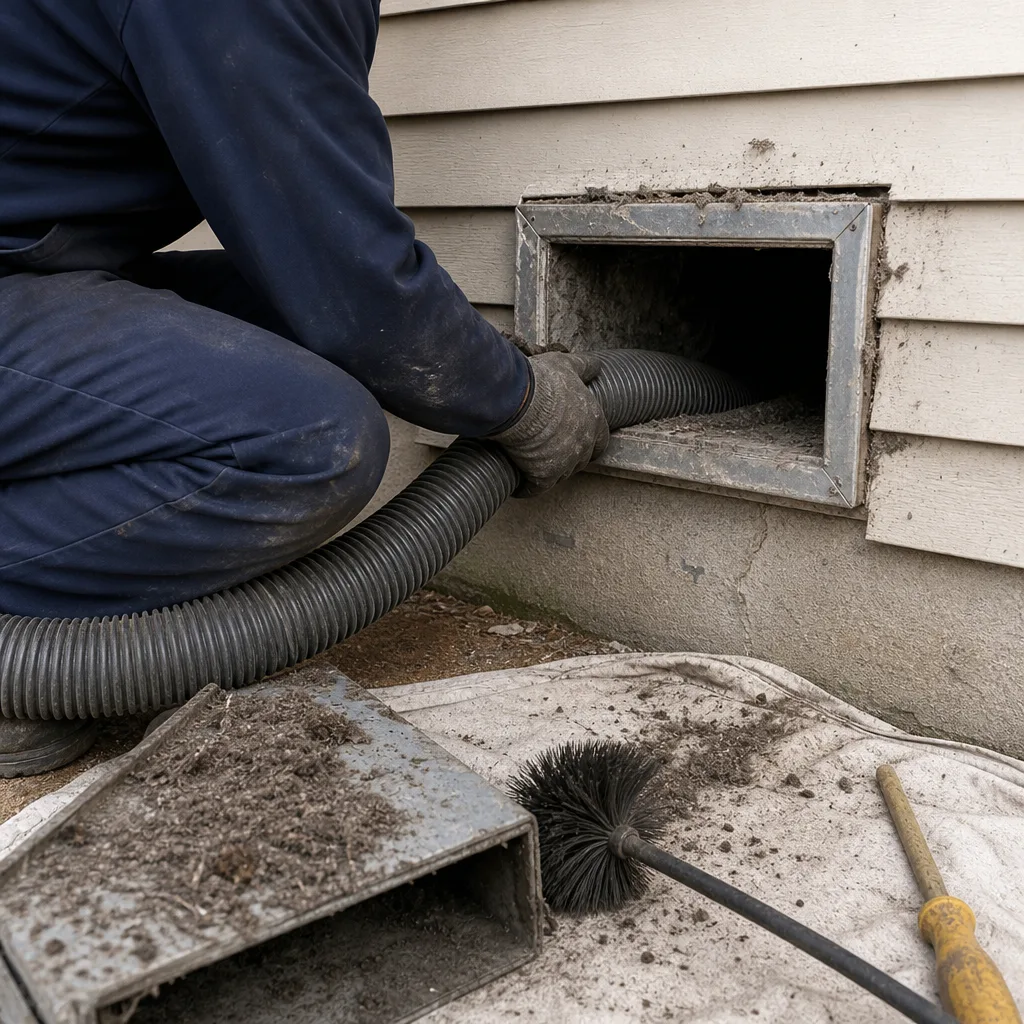
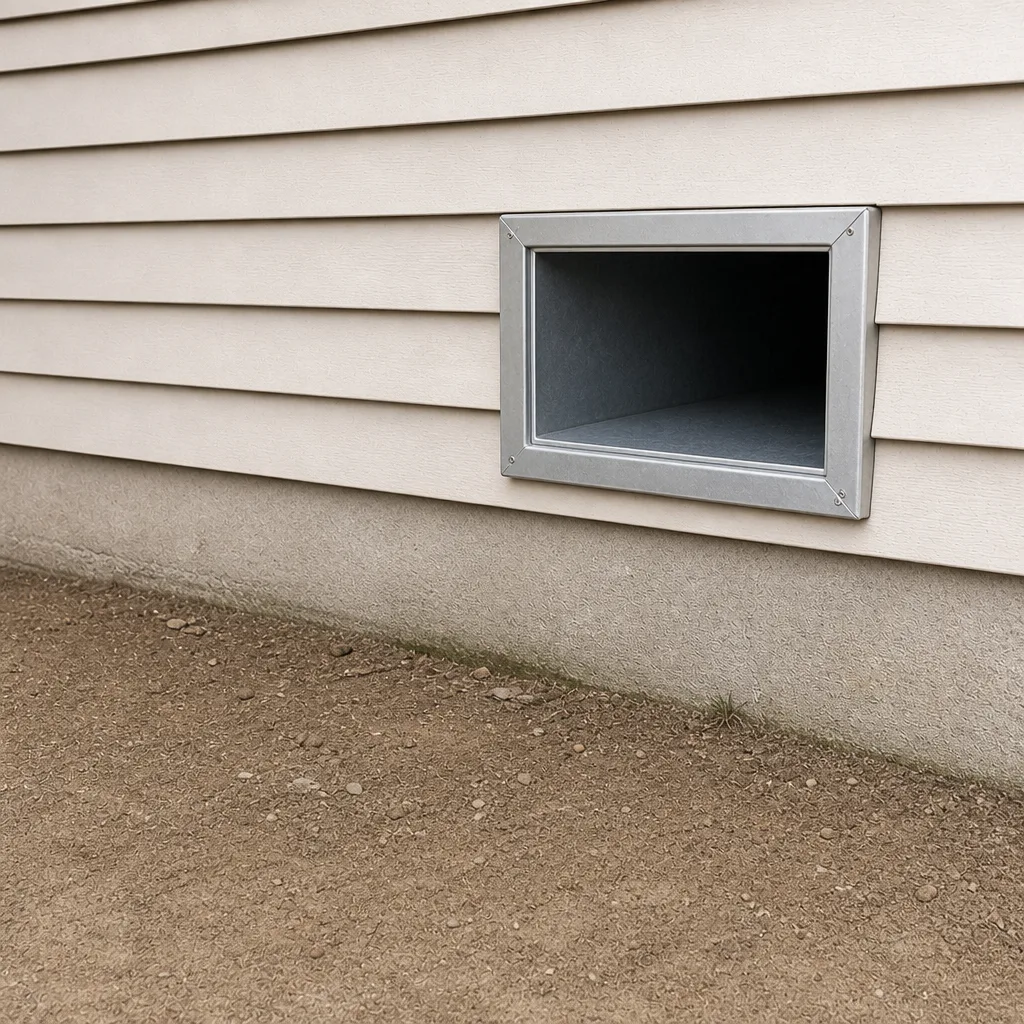
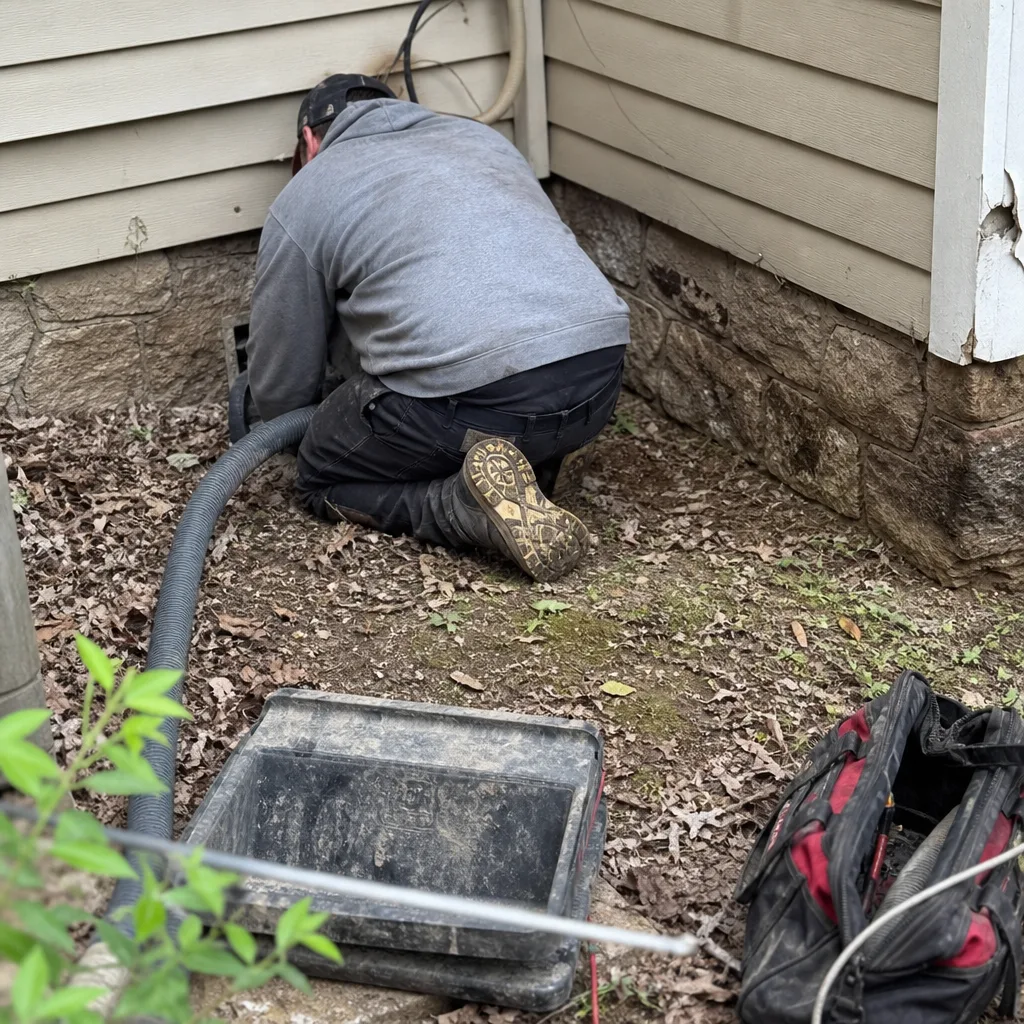
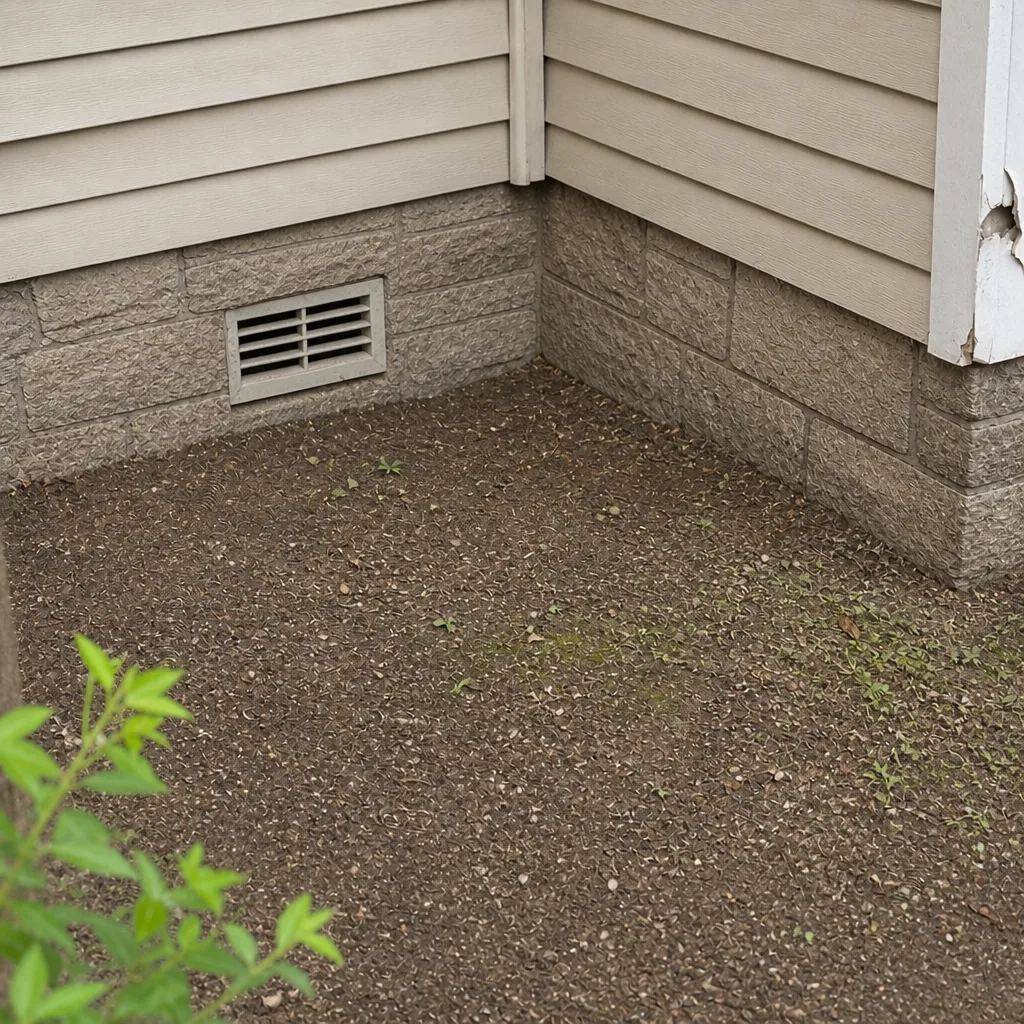
Whole-system duct and dryer vent check with before-and-after photos - you see exactly what came out of your vents
That "$99 whole-house special" is a bait ad - the real number appears once they are in your hallway, or the "clean" is a shop-vac at the register. We photograph the inside of your ducts before and after instead.
Air Duct Cleaning Maintenance Checklist for Clarksville Homeowners
Most homeowners treat duct cleaning as a once-a-decade chore, something to scribble on a list and forget about until a technician mentions it. That’s the wrong frame. A duct maintenance checklist isn’t a calendar of dates. It’s a decision tree built around the variables in your specific home, and here in Clarksville those variables shift with the seasons. Rainfall here averages over 47 inches a year, making this one of the more humid inland cities in Tennessee. That moisture load changes how fast dust and biofilm cake onto duct liner, which means your maintenance rhythm shouldn’t look like a homeowner’s in Phoenix or Denver. What follows is a practical, checkable system for keeping your ducts, dryer vent, and air quality equipment working the way they were designed to.
Quick Answer
A workable air duct maintenance checklist for a Clarksville home combines three rhythms: monthly filter checks, quarterly register and vent inspections, and a full professional cleaning every two to four years, sooner if you’ve renovated, noticed visible dust at registers, or have allergy sufferers in the house. Dryer vents should be cleared professionally once a year, more often in high-lint households. The checklist isn’t a schedule for its own sake; it’s a way to catch airflow problems before they become duct problems.
Styles & brands we work with
- Whole-home duct cleaning
- Dryer vent cleaning
- Camera inspection
- Sanitizing & deodorizing
Table of Contents
- Why Clarksville’s Climate Changes the Duct Maintenance Equation
- Monthly Tasks: Filter Checks and What They Tell You
- Quarterly Tasks: Registers, Returns, and Airflow
- Annual Tasks: The Full-System Review
- Dryer Vent Maintenance: The Safety Item Most Checklists Miss
- The Post-Renovation Checklist (Different From Routine Maintenance)
- What You Can Inspect Safely vs. What Needs a Camera
- Building a Simple Log Sheet for Your Home
Why Clarksville’s Climate Changes the Duct Maintenance Equation
The single biggest variable in how fast your ducts accumulate debris isn’t dust in the air. It’s moisture. When relative humidity sits high for long stretches, the fine dust that coats duct liner doesn’t just sit there. It clumps, and in the presence of condensation it can support microbial growth. That’s the mechanism behind the musty smell some Clarksville homeowners notice in spring and again in late summer. It’s not a mystery. It’s biology working on the surfaces inside your ductwork.
Clarksville’s rainfall pattern matters here. With over 47 inches a year, the ground around your foundation stays damp longer than in drier parts of Tennessee. That dampness finds its way into crawl spaces and basements, which then feed humid air into return ducts and the air handler. The result: the same routine cleaning interval that works in a dry climate may not be enough in Clarksville.
There’s a second variable. Pollen. This part of Tennessee sits in a pollen corridor, with tree pollen in early spring, grass pollen through late spring and early summer, and ragweed in late summer and fall. Every one of those seasons sends fine particulate into your return air. A well-maintained filtration system, whether you’re running a Honeywell or Aprilaire setup, catches a lot of it, but filters aren’t absolute. What gets past them lands on duct surfaces.
And a third: HVAC runtime. Clarksville summers are long and hot. The system runs more hours than a homeowner in a cooler climate would see, and runtime is directly proportional to dust deposition. Every hour the blower moves air, some of the particulate in that air settles out inside the ducts.
Put those three factors together and the takeaway is simple. A calendar-driven cleaning schedule (say, every five years no matter what) is a poor fit for this climate. What you want instead is a checklist that tracks the variables, so you clean when your home actually needs it, not when the calendar says so.
Monthly Tasks: Filter Checks and What They Tell You
Here’s the thing most filter advice gets wrong. The point of checking your filter monthly isn’t to replace it on a fixed schedule. It’s to read the filter as a diagnostic tool. How fast it loads tells you something about your system’s airflow and the dust load in your home, and that information comes before the duct problems do.
A filter that’s dark and loaded after four weeks in a house that should be getting six weeks isn’t just a filter problem. It can indicate restricted return paths, a poorly sealed filter rack letting unfiltered air bypass the media, or duct leakage pulling construction dust from attic or crawl space into the airstream. Reading the filter as a diagnostic is the most underused skill in home HVAC maintenance.
What to check each month:
- Pull the filter and hold it up to a light. Can you see light through it? If not, replace it.
- Note how many weeks it took to load. Write this on a log (more on that below).
- Look at the color of the loading. Uniform gray is normal dust. Black or oily loading suggests other issues. Pinkish or rust-tinted suggests something else entirely and is worth mentioning to a technician.
- Check the filter frame itself for gaps. Any unfiltered air bypassing the filter means your indoor air quality system isn’t working the way it was designed.
- Confirm the filter you’re installing matches the system’s pressure drop spec. A filter with too high a MERV rating for a residential system can choke airflow and create its own problems.
- Note the brand and model on your log. Consistency matters when you’re trying to track changes over time.
If you run a Honeywell or Aprilaire whole-home filtration system, monthly checks also mean confirming the housing is sealed and the media is intact. Those systems work because they’re installed as a closed loop. Once the housing leaks, you’re pulling unfiltered air into the system regardless of how good the filter itself is. Familiarity with these systems is one of the reasons we specify them in our own recommendations; the equipment only works if the installation is tight.
One more monthly item: with Clarksville’s long cooling season, condensate drain pans and lines should be checked for standing water. Standing water in the air handler compartment is a direct invitation for microbial growth that then blows into your ducts. It’s a two-minute check that prevents a much bigger problem.
Quarterly Tasks: Registers, Returns, and Airflow
Every three months, walk your home and check all supply and return registers. This is the part of the checklist where you’re looking for evidence of what’s happening inside the ducts, without opening them. You’re not trying to clean anything. You’re gathering information.
What to look for at each register:
- Visible dark streaking on the register face or the drywall immediately around it. That streak means air is escaping or entering through a gap. The register boot isn’t sealed to the drywall or the boot isn’t connected to the duct properly.
- Dust plumes when the system first kicks on. If a register puffs visible dust for a few seconds each start-up, the duct interior has more loose debris than it should.
- Uneven airflow between registers. If one room’s register feels noticeably weaker than another on the same branch of ductwork, you may have a kink, disconnected run, or excessive leakage.
- Musty odor from any register. This is a moisture signature. In Clarksville’s humidity, odor usually indicates microbial growth that deserves a closer look.
- Air gaps around register boots if you can see behind the grille. In many homes, the register boot is loosely set into a drywall hole with no sealant, and every such gap pulls attic or wall cavity air into your supply air.
- Lint buildup on return grilles, especially in houses with pets. Returns see heavier loading than supplies and often get less attention.
While you’re at it, quarterly is a good time to confirm that the air handler closet or mechanical space doesn’t have visible gaps into an unconditioned attic or crawl space. In Clarksville’s humid climate, duct gaps between conditioned and unconditioned space aren’t just an efficiency issue. They’re a moisture transport problem.
If your quarterly walk turns up two or more of the signs above on the same system, it’s worth scheduling a professional inspection rather than waiting for the next routine interval. Duct problems don’t self-correct, and air duct repair is generally more economical when the underlying issue is caught early.
Annual Tasks: The Full-System Review
Once a year, you want a full-system review that goes beyond the register-level checks. This is when the checklist expands to include things that need either professional eyes or careful homeowner inspection (with the safety caveats we cover below). The optimal timing in Clarksville is right around the transition from cooling season to heating season, when the system is about to start running differently and any dust load from summer is worth clearing before it gets pushed into the supply side.
Annual review items:
- Professional dryer vent cleaning. This is non-negotiable and deserves its own section below.
- Air handler and evaporator coil inspection by a qualified technician. A dirty coil cuts airflow and efficiency, and coil cleaning is a different service than duct cleaning. The two should be coordinated, not confused.
- Condensate drain and pan cleaning and functional test. Standing water anywhere in the air handler compartment should be addressed.
- Duct assessment for visible damage: disconnected joints, torn flex duct in attic or crawl space, crushed sections where a repair person stepped on the duct. Flex duct is particularly vulnerable, and Clarksville homes with attic runs see plenty of it.
- Bath fan and kitchen exhaust ducting check. Both should terminate outdoors. Recirculating range hoods aren’t an exhaust; they’re a filter. Bath fan ducts in cold attics should be insulated and sloped to drain.
- Whole-home filtration system service, including media replacement and housing seal on Honeywell or Aprilaire systems.
- Combustion air and gas appliance venting only where a qualified technician verifies it. This is not a homeowner task.
If you’re scheduling any of this as air duct cleaning work, the annual review is the natural time. It aligns the cleaning event with the seasonal transition, so your system enters peak heating season with clean duct interiors and a fresh filter.
For properties with guests, tenants, or seasonal use, the annual review is also a good point to check that air quality equipment is functioning as intended. Contamination scenarios, from post-renovation dust to wildfire smoke events, are where Abatement Technologies air-purification equipment earns its place in the system, and confirming that equipment is operational once a year prevents finding out at the worst moment that it isn’t.
Dryer Vent Maintenance: The Safety Item Most Checklists Miss
Dryer vent cleaning belongs on your duct maintenance checklist even though the dryer vent has nothing to do with your HVAC. The reason is straightforward: lint accumulation in a dryer vent is the leading cause of residential dryer fires. That’s not a scare tactic. It’s a documented fire cause, and it belongs in front of every homeowner who is thinking about air ducts and airflow at all.
The maintenance rule is simple. Dryer vent cleaning should be done professionally once a year for typical households. It should be done more often if any of the following is true:
- The household runs more than four or five loads of laundry per week.
- There are pets in the home, especially long-haired dogs or cats, whose hair gets through the lint filter.
- The dryer vent run is long, has multiple elbows, or exits through an attic or roof.
- The dryer takes longer than one cycle to dry a load, or the load comes out hot but damp.
- The outside vent flap doesn’t open fully when the dryer is running.
What you can do between professional cleanings:
- Clean the lint screen before every load, not after.
- Check that the flexible transition duct behind the dryer isn’t crushed or kinked. But don’t disconnect it yourself if the connection is rigid or if you’re unsure, because reconnecting a crushed flex duct incorrectly can create its own fire risk.
- Every few months, go to the exterior vent while the dryer is running and confirm strong airflow and full flap opening.
- Never run the dryer without the lint screen in place. Even one load without the screen sends significant lint into the duct.
dryer vent cleaning as a dedicated service is different from duct cleaning. It uses different tools and addresses a different fire safety concern. If a company offers dryer vent cleaning only as an add-on afterthought, the quality tends to show. It’s a service we treat as its own discipline, with the same professional equipment we use on HVAC ductwork. That matters because a proper dryer vent cleaning requires reaching lint that’s compacted against the duct walls, not just pulling the surface layer out with a shop vac.
The Post-Renovation Checklist (Different From Routine Maintenance)
Renovation is the single biggest maintenance event most duct systems will ever experience, and most homeowners handle it wrong. Drywall dust is not the same as household dust. It’s fine, alkaline, and abrasive. It sticks to duct surfaces, and once it’s wet from humidity or condensation, it sets up like plaster. It also clogs filters fast enough that your indoor air quality equipment, whether Honeywell, Aprilaire, or something else, may be overwhelmed within days of a renovation beginning.
The post-renovation checklist is a separate stream from routine maintenance. It has its own sequence:
- Before demolition starts, seal supply and return registers in the work area with plastic and tape. This is your best defense. Dust that never enters the ducts never has to come out.
- During the project, keep the HVAC system running but plan to replace filters every week or two, not monthly. Drywall sanding produces enormous dust volumes.
- Consider a temporary air scrubber with HEPA filtration in the work area, if the project is extensive. This keeps dust out of the return air entirely.
- After the project, change the system filter immediately. Don’t wait for the next scheduled change.
- Schedule a professional duct cleaning once the project is fully complete and air quality has settled. Cleaning too early means cleaning twice, because finish sanding and final paint will add more dust.
- Inspect the air handler and coil at the same time. Construction dust loads the evaporator coil differently than household dust, and coil cleaning should be part of the post-renovation review.
- Replace whole-home filtration media in any Honeywell or Aprilaire housing. Media that was loading during the project is already spent.
If the renovation involved significant dust, consider a contamination-level response rather than routine cleaning. That’s where Abatement Technologies air purification equipment is useful. It’s designed for scenarios where standard cleaning isn’t enough, and it addresses the kind of load that comes from a major renovation, not just a normal year of living.
What You Can Inspect Safely vs. What Needs a Camera
A large part of a good maintenance checklist is knowing where your safe inspection ends. Some tasks are homeowner-appropriate. Others look simple but aren’t, and attempting them creates real risk.
What homeowners can safely do:
- Check supply and return registers for visible dust, airflow, and streaking.
- Inspect visible flex duct in an attic or crawl space if the space is safely accessible (solid footing, adequate headroom, no asbestos or vermiculite visible). Look for crushed or disconnected sections. Don’t disturb insulation.
- Change filters and note loading on a log.
- Clean the outside dryer vent flap and confirm airflow.
- Check that bath exhaust fans sound normal and pull air (a tissue held near the grille should stick).
What requires a professional:
- Camera inspection of duct interiors. Consumer borescopes can’t reach past the first elbow, and duct interiors are where the real story is. Professional cleaning systems, including the Rotobrush and Nikro equipment we use, include the camera capability to see what you’re actually dealing with before and after cleaning.
- Any work inside the air handler compartment beyond filter changes. Electrical components, coils, and blower wheels are involved, and the risk is real.
- Disconnecting and reconnecting duct sections, especially flex duct. A poorly resealed joint leaks more than the dust you were trying to address.
- Anything involving the furnace, gas lines, or combustion venting. This is a safety boundary. Don’t cross it yourself; call a licensed technician.
- Dryer vent cleaning beyond the first few feet. The lint that causes fires is the compacted lint deep in the run, and reaching it requires proper tools.
If you’re unsure which side of the line you’re on, the safer assumption is always to treat it as professional work. The cost of a professional cleaning or a repair call is far less than the cost of an injury.
Building a Simple Log Sheet for Your Home
A maintenance log is a sheet of paper, a spreadsheet, or even a note on your phone. Its power isn’t in the format. It’s in the continuity. Over a year or two, the log shows you patterns your memory can’t hold. That’s what turns a checklist from a to-do list into a diagnostic tool.
Here’s what a useful log tracks:
- Date and task performed. Filter change, register check, professional service.
- Filter brand and model. This matters for tracking whether a change in filter type correlates with a change in loading rate.
- Filter loading interval. How many weeks between changes, and what was the season.
- Register notes. Any visible dust, uneven airflow, or odor, dated.
- Dryer vent service date. A dedicated line item so it doesn’t get lost.
- Static pressure readings if you have a technician take them. Static pressure is the single best numeric indicator of duct system health, and tracking it over time reveals duct degradation before it becomes a symptom.
- Any professional repairs. Fixed duct runs, replaced flex, resealed register boots. Date and description.
Keeping this log makes every subsequent service call more informed. When a technician comes out, the log tells them what the system has been doing between visits. It’s also how you separate a maintenance question from a repair question without guessing.
One more item for the log’s first page: the date and scope of the last full professional duct cleaning. As a rough guide, Clarksville homes typically need professional cleaning every two to four years. Homes with pets, allergy sufferers, high-occupancy households, or recent renovations need it more often. The log tells you whether you’re inside that window or outside it.
Common Mistakes to Avoid
- Treating cleaning as a fixed-interval chore. The right interval depends on your home, your pets, your renovations, and your duct condition. A five-year schedule that ignores all four is a guess, not a plan.
- Replacing filters but not reading them. A filter that’s dark at four weeks is telling you something. Replacing it and moving on without reading the loading rate wastes the signal. Clarksville humidity makes this loading information especially valuable, because moisture amplifies what the filter picks up.
- Forgetting the dryer vent entirely. Dryer vents don’t have a filter you can see and they don’t smell. That’s exactly why they’re the safety item most checklists miss. Annual professional cleaning is the baseline.
- Running the HVAC hard through a renovation. Drywall dust enters the returns and settles in the ducts, then takes a professional cleaning to remove. Sealing registers before demolition is far cheaper than cleaning the ducts after.
- Assuming a low cleaning quote addresses the whole system. A crew with a shop vac and a truck can’t clean duct liner effectively, and the equipment gap shows up in the results. Professional-grade equipment, not consumer substitutes, is the baseline for verifiable work.
- Skipping repair when cleaning exposes a problem. Cleaning reveals what maintenance hid, and disconnected runs, crushed flex, and torn duct liner are common findings. If the cleaning contractor can’t repair what they uncover, you end up hiring a second company to finish the job. That’s where having cleaning and repair as one service saves real coordination effort.
- Confusing duct cleaning with air quality remediation. They’re different scopes. A contaminated scenario, from mold growth to chemical residue to heavy construction load, needs tools and equipment that standard cleaning doesn’t use. Abatement Technologies and Guardsman products come into play here, and a contractor without those capabilities is a mismatch for a contamination job.
See the difference
 Before
 After
 Before
 After
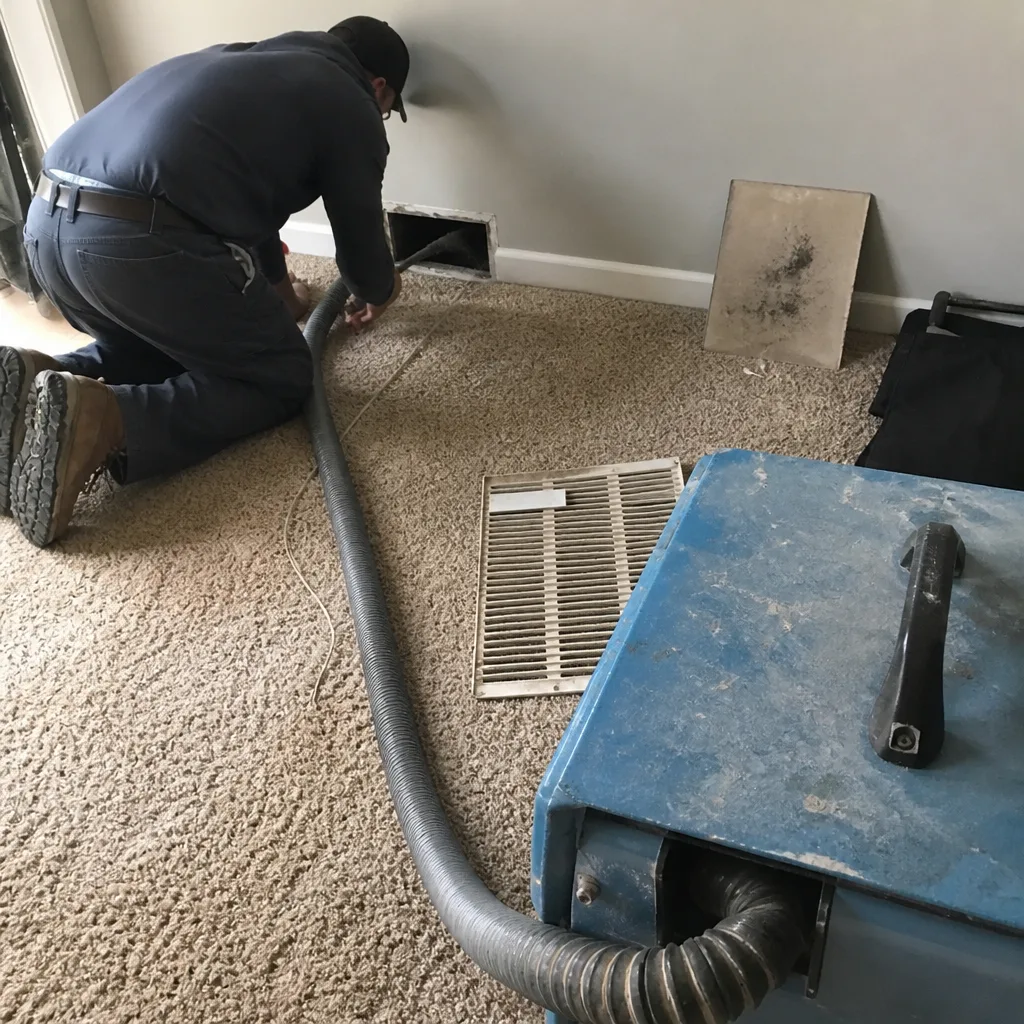 Before
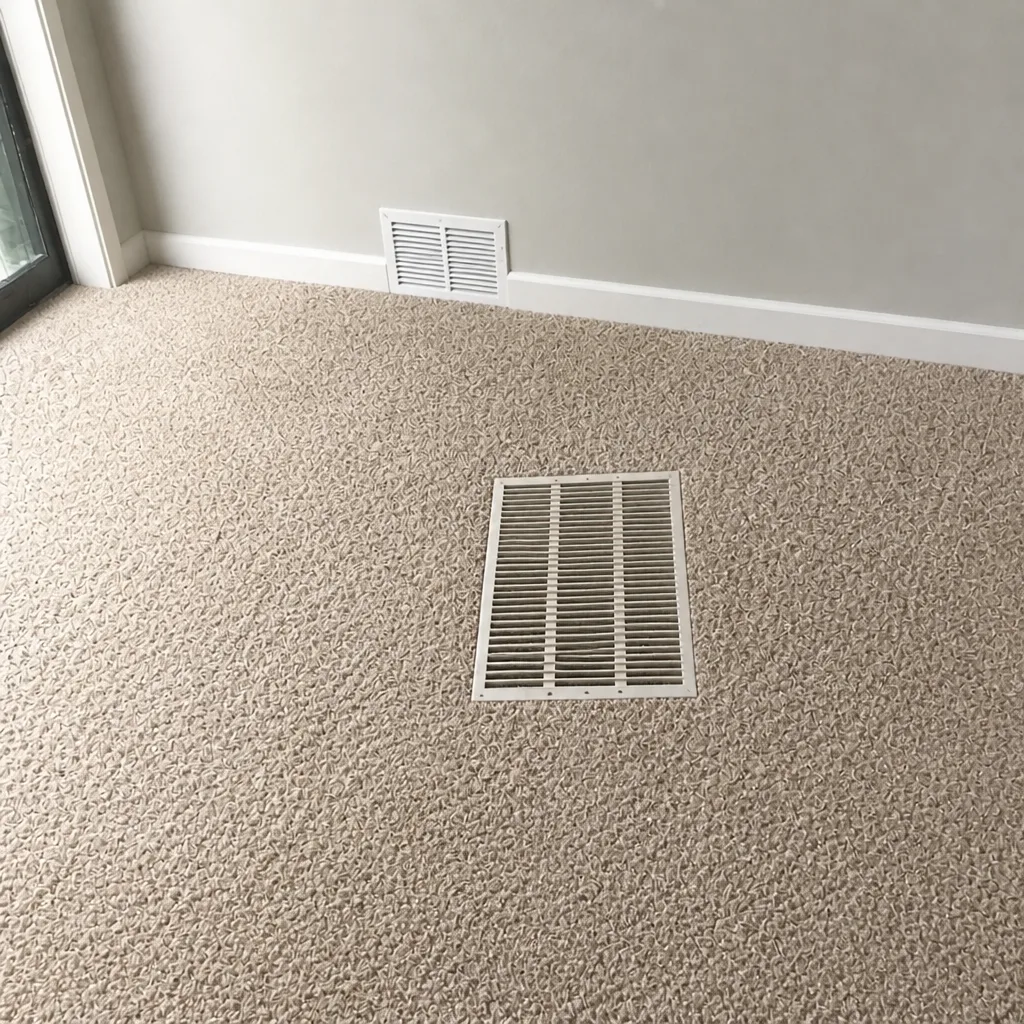 After
When to Call a Professional
You need professional involvement when your own inspection turns up signals the checklist can’t resolve. Persistent musty odors from registers, visible dust plumes at system start-up, register streaking on multiple registers, a filter that loads in under three weeks repeatedly, or airflow that’s clearly weak in some rooms and fine in others. Any one of those signs justifies a call. Two or more at once means the ducts may have a repair component, not just a cleaning need.
You also call a professional when it’s been more than four years since the last full cleaning, when you’ve completed a renovation, or when a dryer vent hasn’t been cleaned in the past year. None of those justify waiting for the next scheduled interval.
At Duct Cleaning Clarksville, we offer free estimates in Clarksville and use professional Rotobrush and Nikro equipment to assess the system before any work starts. Call (833) 519-7736. We answer 24/7. Fast dispatch from 7am to 7pm, Sunday through Friday.
Frequently Asked Questions
Every two to four years for most homes in Clarksville, with more frequent cleaning for pet households, allergy sufferers, and homes recovering from renovation. The interval shortens in this climate because the combination of long cooling-season runtime, high humidity, and pollen load accelerates the build-up compared with drier inland cities. A maintenance log that tracks filter loading and register condition is the best guide to your specific interval. Call (833) 519-7736 for an exact quote based on your home. Estimates are free.
Most full-system air duct cleaning in Clarksville is priced by whole-house scope rather than the per-vent pricing many advertised coupons use. The specific range depends on the number of systems, duct configuration, and whether repair work is included. What matters more than the headline number is the scope: a quote should state what equipment will be used, whether cameras will inspect the interior, and what would trigger additional charges. We give one flat price per system, agreed before work starts. Call (833) 519-7736 for an exact quote. Estimates are free.
Cheaper quotes usually reflect a difference in equipment and scope, not in efficiency. A crew using a shop vac and a brush can’t clean duct liner effectively, and the work may look done without being done. Professional-grade Rotobrush and Nikro equipment is standard in the industry for a reason; it’s what reaches and removes the build-up that a consumer-grade tool misses. Ask what equipment will be used and whether before-and-after photos will be taken. If the answer is vague, the price is telling you something. Call (833) 519-7736 to compare a professional quote. Estimates are free.
Before-and-after photos of your own ducts are the clearest verification. Professional cleaning services use cameras to document the interior before cleaning and again after, so you can see what changed. Without photos, you’re trusting a verbal report. Ask for images during the walkthrough. Call (833) 519-7736 to schedule a free estimate. Estimates are free.
No, not effectively, and not safely in some cases. Consumer shop vacs don’t generate enough airflow to lift settled debris from duct liner, and pushing a brush on a drill extension into ductwork without a camera risks disconnecting joints or damaging flex duct. Register-level cleaning is reasonable for a homeowner to do. Interior duct cleaning is professional work. Call (833) 519-7736 to discuss what your system actually needs. Estimates are free.
Higher ambient humidity means dust that settles in ducts has more opportunity to clump and support microbial growth than it would in a drier climate. With rainfall over 47 inches a year and long humid seasons, Clarksville homes see this effect more than inland cities with drier air. The practical response is to keep condensate pans clear, address any moisture infiltration into the air handler compartment quickly, and schedule professional cleaning on the shorter end of the two-to-four-year window if you notice recurring musty odors. Call (833) 519-7736 for a professional assessment. Estimates are free.
The Bottom Line
A duct maintenance checklist works because it’s built around your home, not around the calendar. Track filter loading on a log so you can see how fast dust accumulates and what it tells you about airflow. Walk the registers every quarter and treat them as windows into what’s happening inside the ducts. Commit to an annual review that includes professional dryer vent cleaning, because lint build-up in the vent is the leading cause of residential dryer fires and it doesn’t announce itself. Handle post-renovation duct care as its own event, not a routine task. And when the checklist turns up signals you can’t resolve from the register level, bring in a professional who uses camera inspection and professional-grade equipment so you know the work was actually done, not just described.
For clean ducts, a clear dryer vent, and a repair capability that means one call covers cleaning and whatever the cleaning reveals, Duct Cleaning Clarksville is here. Call (833) 519-7736 for a free estimate. We answer 24/7. Fast dispatch from 7am to 7pm, Sunday through Friday.
Written by the team at Duct Cleaning Clarksville.