
Last updated November 15, 2026
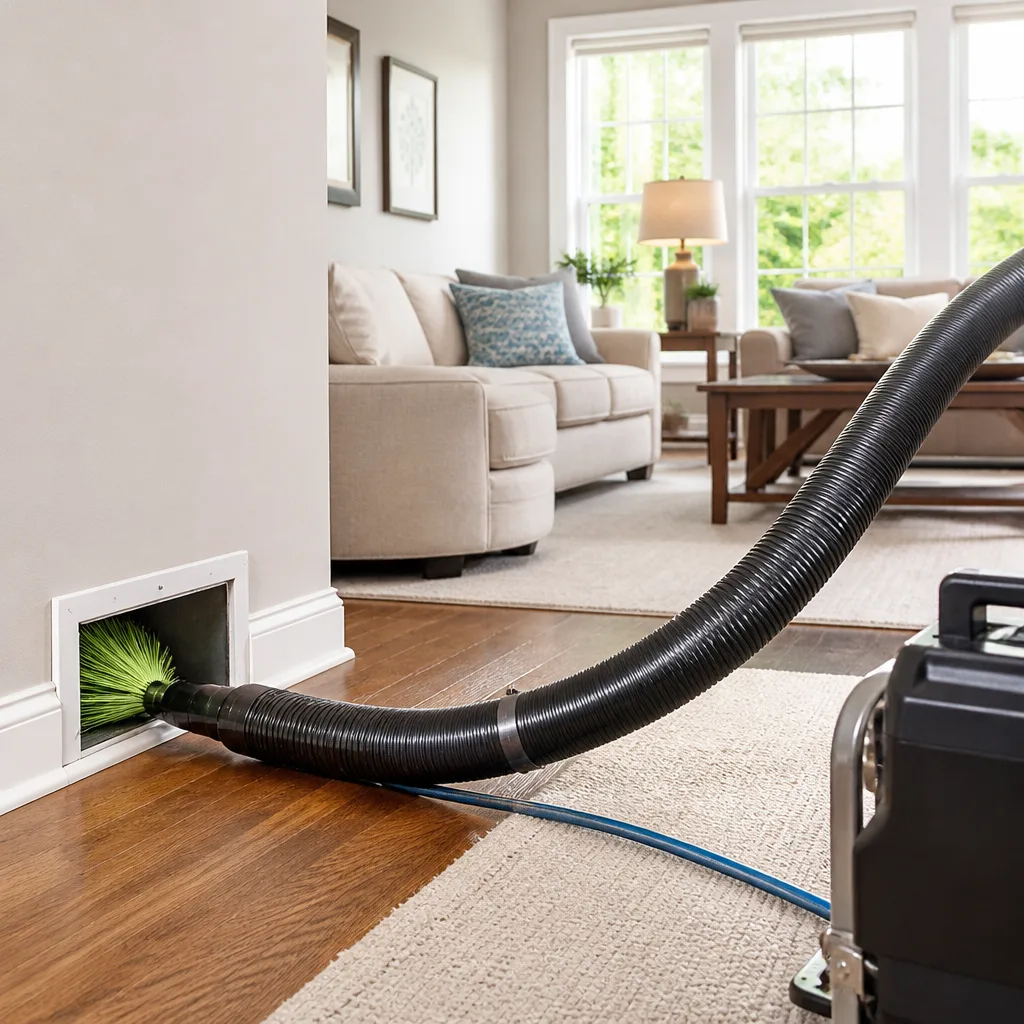 Whole-home duct cleaning
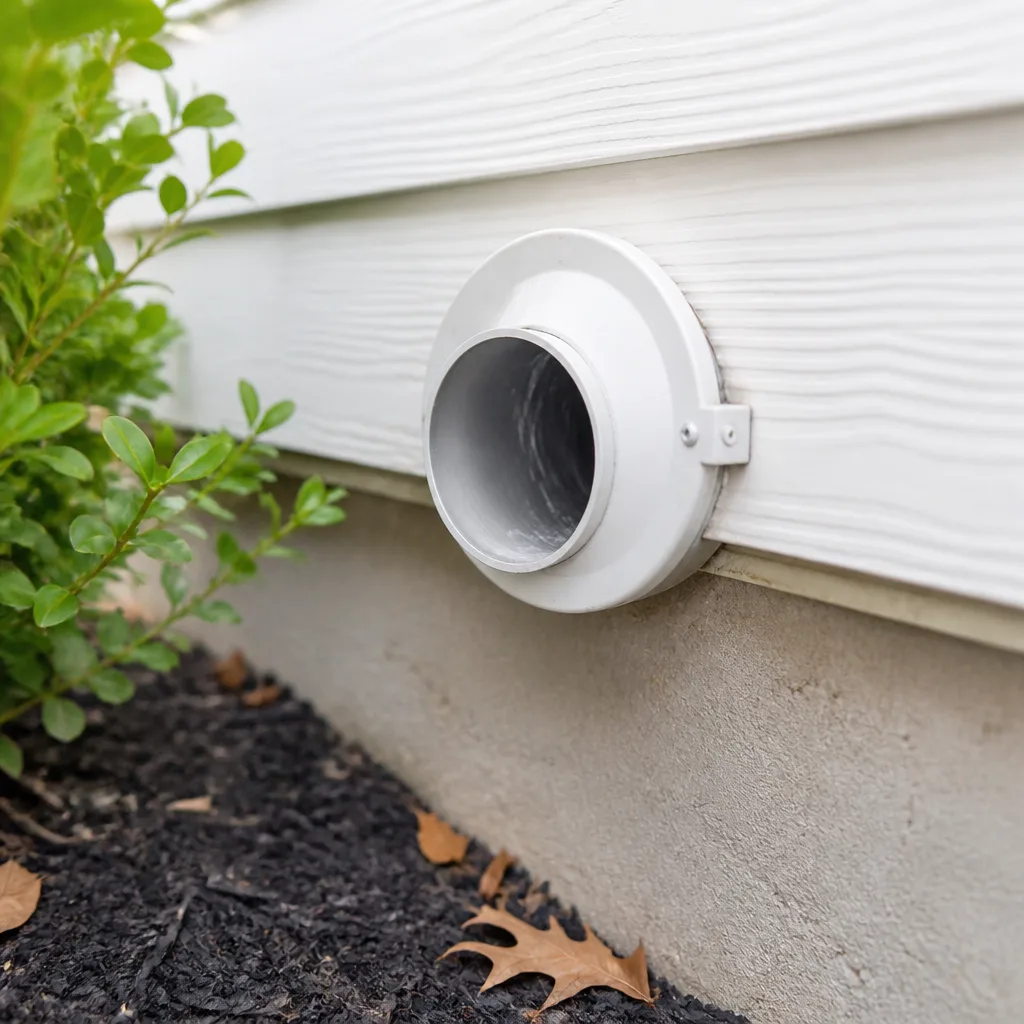 Dryer vent cleaning
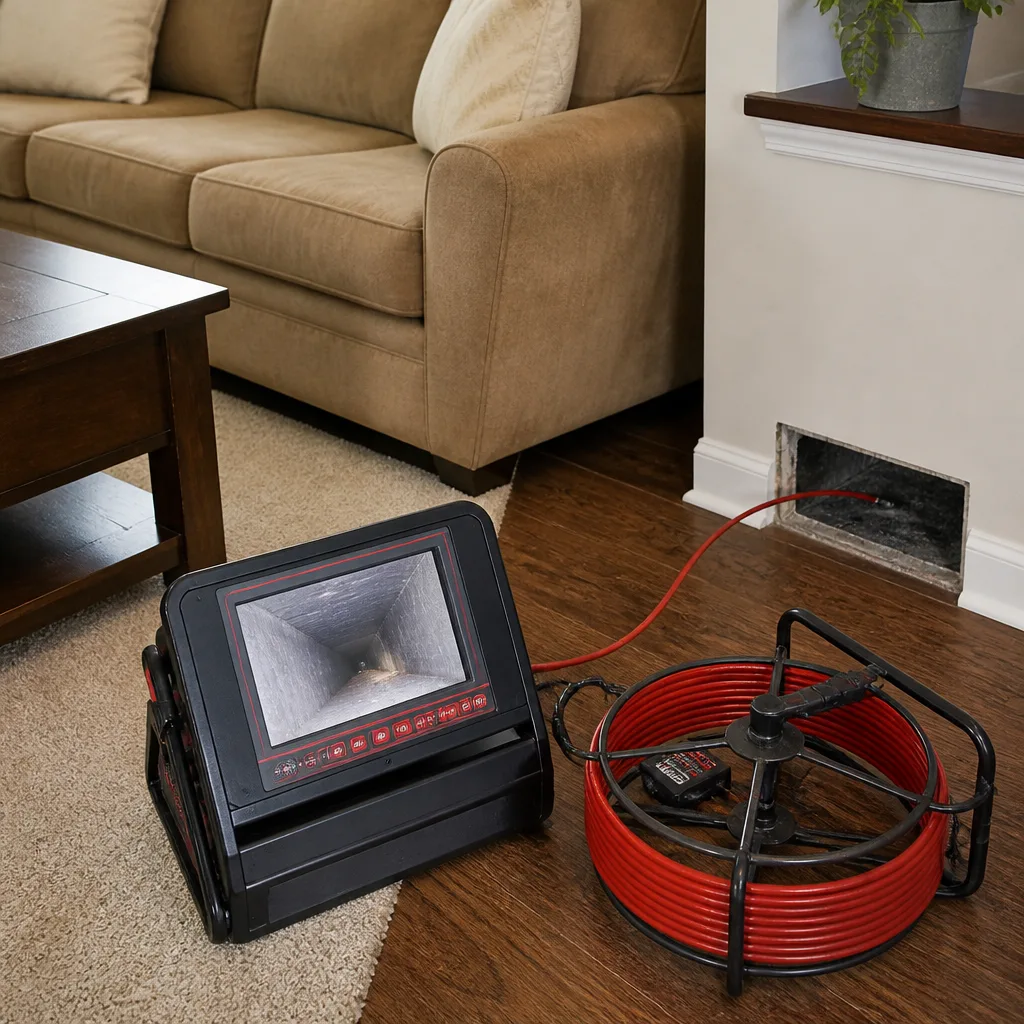 Camera inspection
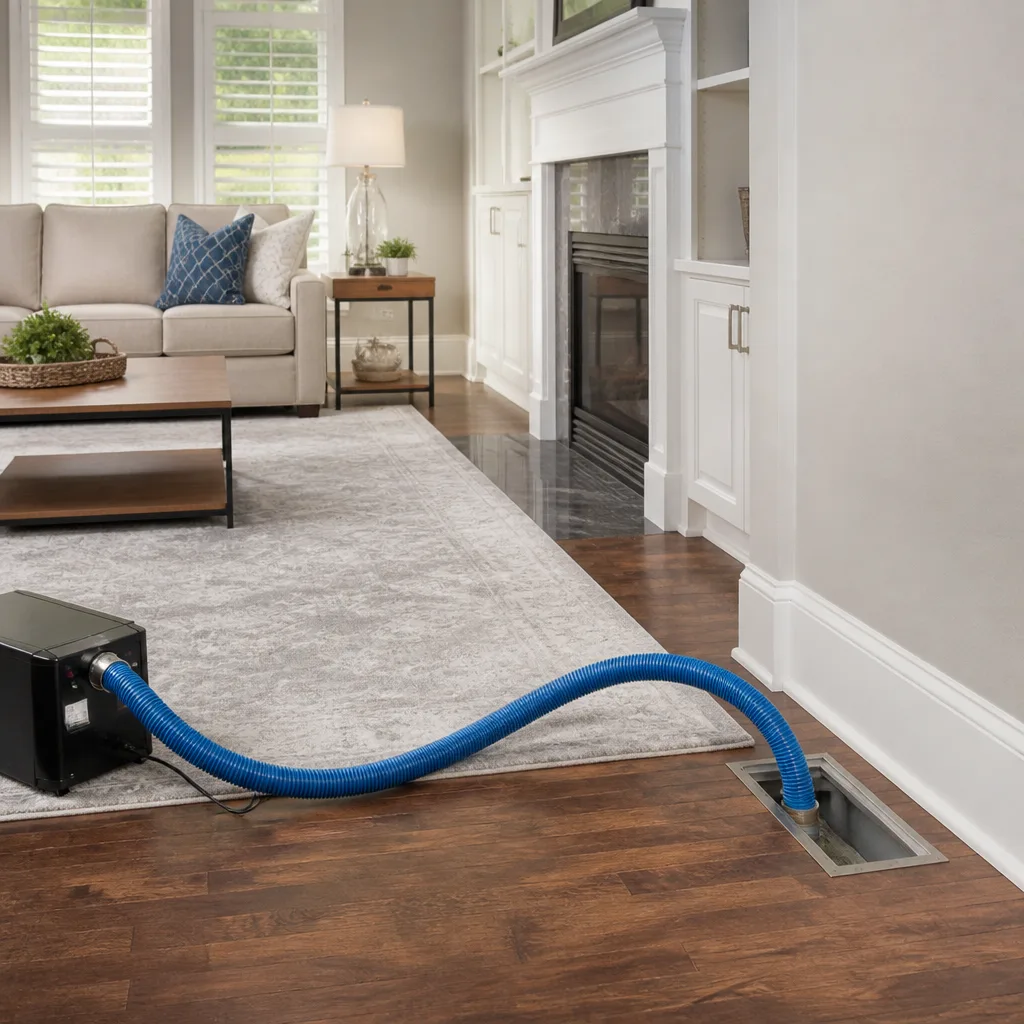 Sanitizing & deodorizing
Whole-system duct and dryer vent check with before-and-after photos - you see exactly what came out of your vents
That "$99 whole-house special" is a bait ad - the real number appears once they are in your hallway, or the "clean" is a shop-vac at the register. We photograph the inside of your ducts before and after instead.
Air Duct Cleaning Troubleshooting in Clarksville: Common Problems and How to Fix Them
A weak register and a cracked plenum feel almost identical from the hallway. Both blow soft. Both leave the far bedroom stuffy. One is a register face you can wipe and reseat in a few minutes; the other can mean pulling apart a trunk line and sealing it back together, which runs into the hundreds. The complaint doesn’t tell you which one you have. The system does, if you know what to read. That’s what this guide is for. Most duct complaints in Clarksville come down to a handful of root causes, and almost all of them can be traced before anyone runs a vacuum. We’ll walk through how to read airflow, filters, and crawl spaces the way a technician does, so you can tell a cleaning problem from a repair problem from an HVAC problem and stop paying for the wrong one in Clarksville.
Quick Answer
Most air duct problems in Clarksville fall into three buckets: dirty ducts full of buildup, physically damaged ducts (disconnected flex runs, crushed pipe, failed seals at the plenum), or an HVAC problem where the ducts are innocent and a dirty evaporator coil or a failing blower motor is choking airflow. You tell them apart by checking filter condition, feeling airflow at several registers, and looking at the visible duct joints and crawlspace. Cleaning fixes the first, air duct repair fixes the second, and the third needs HVAC work rather than duct cleaning. Getting the diagnosis right first is what saves the money.
Styles & brands we work with
- Whole-home duct cleaning
- Dryer vent cleaning
- Camera inspection
- Sanitizing & deodorizing
Table of Contents
- Symptom to Cause: Which Problem Do You Actually Have?
- The Dollar Bill Static Pressure Test
- Crawlspace Moisture and Musty Odors in Clarksville
- Cleaning vs. Sealing: Which Does Your Duct Need?
- When a “Duct Cleaning” Fix Is Really an HVAC Issue
- Dryer Vent Problems That Get Mistaken for Duct Problems
- Filters, Filtration, and Why Your Honeywell or Aprilaire System Underperforms
- Common Mistakes to Avoid
- When to Call a Professional
Symptom to Cause: Which Problem Do You Actually Have?
Before you call anyone, do the diagnostic work that a technician would do in the first ten minutes. Symptoms point to causes far more reliably than a guess from a coupon mailer does.
Step 1: Check the filter first
Pull the return filter and hold it up to the light. A filter that’s grey and matte across the whole face is loading, and a heavily clogged filter chokes the whole system. That alone can make every register in the house feel weak. If you haven’t changed it in months, put a fresh one in and give the system an hour before you judge airflow. This one step rules out a surprising number of “duct” complaints.
Step 2: Feel the airflow at every supply register
Walk the house with your hand at each supply. Strong at one register and weak at another points to a branch problem. Weak at every register points upstream, meaning filter, blower, coil, or a major trunk issue. A single dead register points to a disconnected flex run behind the wall. Don’t skip rooms you don’t use; they tell you what the trunk is doing.
Step 3: Look at the accessible duct
In the attic, crawlspace, or basement, find the joints where flex or hard pipe meets the plenum and the boots. Look for tape peeling away, mastic cracking, or the inner liner of flex duct collapsed and crushed. A crushed flex run kills airflow to the room it feeds. A disconnected run simply dumps conditioned air into the crawlspace.
Step 4: Sniff and look for moisture
A musty smell that doesn’t change after cleaning points to moisture. A dusty, dry, stale smell that eases with airflow usually points to dust and buildup. See the crawlspace section below for why this matters so much in Clarksville.
Step 5: Compare the diagnosis against the pattern
Weak everywhere plus a clogged filter plus a musty smell plus visible condensation on ducts usually means cleaning won’t fix it alone. Weak everywhere with clean ducts and a clean filter points to HVAC. A dead room with good static pressure points to a disconnected run. Right diagnosis, right service.
The Dollar Bill Static Pressure Test
You can check for airflow restriction without buying a manometer. A dollar bill at a supply register does most of the work.
- Tape or hold a bill lightly across the face of one supply register, covering most of the grille but leaving it loose enough to flutter.
- Watch how it moves. Strong, steady flutter means healthy flow at that branch. Weak flutter or none at all means the branch is starved, blocked, or disconnected.
- Repeat at three or four registers across different zones of the house. Note the pattern.
- Interpret the pattern. Weak at every register points to the trunk or the air handler. Weak at only one or two points to a branch or a duct problem behind the wall or above the ceiling.
- Check returns too. A strong return is a good sign. A weak return suggests the return path itself is undersized or blocked.
The flutter test won’t give you a psi number, but it tells you where the restriction is located. That’s the piece that matters, and it’s the piece most homeowners skip before calling. Our technicians confirm with professional-grade Rotobrush and Nikro equipment once they’re on site, but by then the diagnosis is already narrowed down, which keeps the visit focused on the actual fix.
One caveat: the dollar bill test only reads relative strength. A house with a properly sized system will flutter every register at a similar mild level. You’re looking for outliers, not for hurricane force. In Clarksville’s tight newer subdivisions, undersized returns are common, and a weak return at a single room is worth flagging for the HVAC contractor even if the supply side looks fine.
Crawlspace Moisture and Musty Odors in Clarksville
The Clarksville area sits on clay-heavy soil, and that changes the duct story. Clay sheds water rather than absorbing it, so during wet stretches the ground around and under a slab or pier-and-beam foundation holds moisture. Crawl spaces stay damp longer than homeowners expect. That dampness shows up indoors as a musty smell that doesn’t clear when you clean the ducts.
If a technician cleans your ducts in Clarksville and the smell comes back in a couple of weeks, the ducts are not the source. The crawl space is. Here’s what to understand:
- Vapor barrier coverage: A crawlspace with bare soil or a torn, thin-faced vapor barrier lets ground moisture rise into the space year-round. Ducts in that space pick up moisture on their exterior and the smell travels with the air.
- Duct insulation soaked from below: Flex duct with compromised insulation wicks moisture into the fiberglass. Cleaning blows air through it; the moisture remains.
- Biological growth in the plenum: Damp crawlspace air pulled into the return can support growth on the inside of the plenum and nearby duct. Cleaning removes what’s loose; the moisture has to be addressed or it comes back.
- Foundation vents doing their job but not enough: In a clay-soil lot, passive vents alone often don’t keep crawlspace humidity in a manageable range.
The fix usually starts with sealing the vapor barrier properly, closing off obvious ground-moisture paths, and sometimes a dedicated crawlspace dehumidifier. Duct cleaning in Clarksville removes what’s already there. It doesn’t stop new moisture from moving in. Both matter, and a technician who tells you otherwise doesn’t understand the local soil.
If the crawlspace has significant contamination (visible growth on joists, standing moisture, or heavy soil contact on ducts), we bring in Abatement Technologies air-purification equipment to handle the contamination end of the job properly rather than just vacuuming up the dust. That’s the correct order: control the moisture, then remove what’s already there.
Cleaning vs. Sealing: Which Does Your Duct Need?
Cleaning removes what’s inside the duct. Sealing closes the gaps that let attic air, crawlspace air, and unconditioned air back in. They solve different problems.
Signs your ducts need cleaning
- Visible dust buildup on the inside of the register boots.
- Dust reappearing on horizontal surfaces within a day or two of wiping.
- A dusty, stale smell when the system first kicks on.
- Recent renovation that generated fine drywall dust or sawdust.
- Ducts that haven’t been cleaned since the house was built or bought.
Signs your ducts need sealing
- You can feel air escaping near a joint at the plenum, in the attic, or in the crawlspace.
- Conditioned rooms won’t reach the setpoint while the return side pulls attic or crawlspace air.
- Visible peeling tape or cracked mastic at the joints.
- New construction where the boots weren’t sealed to the drywall.
- A noticeable temperature difference between rooms on the same zone.
If you’re looking at both lists and nodding, you probably need both. In our experience, the typical older Clarksville home has been cleaned or sealed in the past and only gets one side done, which is why the same problem keeps coming back.
Sealing is done with mastic at the joints, or with aerosol-based duct sealing (sometimes called Aeroseal) for interior leaks that aren’t accessible. Aerosol sealing has a place, but it’s not a substitute for reseating a disconnected flex run or replacing crushed pipe. When you get a quote, ask which method the contractor is using and why. If they can’t answer, keep calling.
How to check for seal leaks without a meter
- Turn the system on and let it run for a few minutes.
- Run a damp hand along accessible duct joints at the plenum and trunk. Felt air means a leak.
- Look for smudged dust lines where air has been escaping over time. Those are the leaks.
- Check boot-to-drywall seams in rooms. Warm air at the edge of the boot in cooling season means the seal is failing.
This kind of check pairs well with professional air duct cleaning, because a technician who’s already in the system can document the leaks during cleaning and address them in the same visit rather than making you schedule a second one.
When a “Duct Cleaning” Fix Is Really an HVAC Issue
This is the single most expensive misdiagnosis in the trade: paying for duct cleaning when the real problem is a dirty evaporator coil, a failing blower motor, or a refrigerant issue. Cleaning the ducts won’t fix any of those.
How to tell a dirty evaporator coil from a dirty duct
A dirty coil chokes airflow at the air handler and shows up as weak flow at every register plus a wet or clammy feel in the air, sometimes ice on the refrigerant lines in summer. A dirty duct shows up as weak flow at specific registers plus a visible dust problem inside the boots. Both produce weak flow, but only one of them changes if you clean the coil. If the ducts are visibly clean and airflow is still weak, stop looking at the ducts.
How to tell a failing blower motor from a duct restriction
A failing blower motor often starts with a hum you didn’t hear before, intermittent airflow, or airflow that’s weak on cool but returns to normal after the system rests. A duct restriction is consistent: the same rooms are weak every day. Consistency points to ducts; inconsistency points to the motor or the control board.
How to tell a refrigerant problem from a duct problem
Refrigerant problems show up as warm air at the registers even at the right thermostat setting. Duct problems show up as the right air temperature but not enough of it. Put a thermometer in a register. If the supply air is warm, the ducts aren’t the story.
Order of operations
- Change the filter. Wait an hour. Recheck airflow.
- Do the dollar bill test at three registers. Note the pattern.
- Look at accessible ducts for disconnected or crushed runs.
- If airflow is weak everywhere and the ducts look clean, have the HVAC contractor check the coil, blower, and charge before you spend anything on duct cleaning.
- If airflow is weak at specific registers and the ducts look bad, get a duct cleaning and repair quote.
In our experience, the HVAC contractor and the duct specialist are ideally the same conversation. That’s why we keep air duct repair as a service alongside cleaning; if the cleaning exposes a disconnected run or a crushed boot, we fix it instead of telling you to call someone else.
Dryer Vent Problems That Get Mistaken for Duct Problems
Not every duct problem is HVAC. Dryer vents share the same basic failure modes as HVAC ducts, but the consequences are different. A clogged dryer vent is a fire risk, not just an efficiency issue.
How to tell if your dryer vent is the problem
- Clothes take two cycles to dry where one used to do the job.
- The dryer cabinet feels hot to the touch on the outside.
- The exterior vent flap doesn’t open fully, or no warm air comes out when the dryer runs.
- You find lint around the dryer, along the duct path, or on the exterior wall.
- A burning smell from the dryer cabinet.
If two or more of those are true, stop using the dryer until the vent is cleared. The lint that builds up inside a dryer vent is fuel, and the interior of the duct gets hot enough to ignite it. Our professional dryer vent cleaning treats this as a safety service, not an add-on.
What a professional dryer vent cleaning covers
- The dryer is unplugged and pulled clear of the wall, and the flex connection is disconnected.
- The duct is cleaned end-to-end with rotary brushes and vacuum, from the dryer connection to the exterior cap.
- The exterior termination flap is checked for full travel and cleared of lint or bird nests.
- The dryer is reconnected, and heat output is confirmed before the dryer is running a load again.
The most common type of dryer vent issue we come across is a long run with too many elbows and a crushed flexible connection behind the dryer. Flexible accordion duct that’s crimped behind the unit blocks airflow even when it looks clear from the front. That’s a vent problem, not a duct cleaning problem, and no amount of HVAC duct cleaning fixes it.
Filters, Filtration, and Why Your Honeywell or Aprilaire System Underperforms
If your home has a Honeywell or Aprilaire whole-home filtration system, duct condition affects filtration performance more than most people realize. A filter is only as good as the airflow it sees. Restricted airflow and dust-loaded ducts make even a good media filter struggle.
- High-MERV media filters need adequate static pressure: A restrictive filter in a system with restricted ducts compounds the problem. Duct cleaning restores the flow the filter was designed for.
- Dust loading shortens filter life: With dusty ducts, the media filter loads faster and the filtration performance drops before the filter looks ready to change.
- Bypass leaks around the filter housing: A filtration system pulling air from around the filter housing gets whatever the ducts dump into the return. Resealing the housing and cleaning the ducts helps filtration get back to spec.
- Whole-home humidifiers integrated with the air handler: Aprilaire humidifier and filtration assemblies need clean airflow to work as designed. Duct restrictions or dirty evaporator coils can leave the humidifier feeding air that never reaches the rooms.
When we clean a home with this kind of system, we look at the filtration assembly as part of the job, not as an afterthought. If the ducts are loaded and the filter housing is leaking, cleaning alone won’t fix filtration performance. Capturing the dust at the source, then getting the filtration side airtight, keeps the media filter doing its job longer.
Homes in Clarksville with newer tighter construction are especially susceptible to filter loading, because the shell holds more dust indoors than a leaky older home does. That’s a good thing for efficiency and a reason to stay on top of both filtration and duct condition.
Common Mistakes to Avoid
- Replacing ducts before checking the filter. A clogged filter on a system that hasn’t been serviced in a year can mimic a duct problem exactly. Change it, wait an hour, recheck before you commit to any repair in Clarksville.
- Paying for duct cleaning when the coil is dirty. If airflow is weak everywhere and the register boots look clean, ask for the evaporator coil and blower to be checked first. Cleaning dusty ducts won’t raise static pressure if the coil is the choke point.
- Trusting a coupon price as the real number. A very low advertised price usually changes once the technician sees the system. Ask for a flat price per system, agreed before work starts, and written down.
- Skipping the crawl space inspection. In Clarksville’s clay soil, a cleaning visit without a crawl space check often means the musty smell comes back and the job gets blamed on the wrong thing.
- Assuming a dryer vent is fine because the dryer works. Dryers keep tumbling with a clogged vent for months before drying times suffer. Lint buildup is a fire risk every one of those months.
- Choosing a crew that doesn’t carry professional equipment. A shop vac and a rented brush isn’t duct cleaning. Rotobrush and Nikro systems are standard for a reason: they reach the whole system and capture what they dislodge.
- Getting a quote without asking what’s included. Ask whether the technician cleans the plenum, the boots, and the return side, and whether they’ll show before-and-after photos of your own ducts. If the answer to either is no, keep looking.
When to Call a Professional
Some checks belong in the homeowner’s hands, and some don’t. Change your own filter. Do the dollar bill test. Look at accessible duct joints in the attic or crawl space if it’s safe to get to them. After that, the work moves into territory that needs proper equipment and, on the right systems, the right safety practices.
Call a professional when you find a disconnected or crushed flex run, visible biological growth in the crawl space or plenum, a dryer vent you can’t reach end-to-end, or a filtration system that’s not keeping up despite new filters. Call when weak airflow persists after a filter change and the pattern is consistent. Call when you smell something musty and the ducts have already been cleaned. Call when the crawl space has obvious moisture or a torn vapor barrier, because duct work alone won’t solve it.
Duct Cleaning Clarksville offers free estimates in Clarksville. We use professional-grade Rotobrush and Nikro systems, we handle air duct repair alongside cleaning, and we bring Abatement Technologies equipment when contamination is part of the picture. Call (833) 519-7736. We answer 24/7. Fast dispatch from 7am to 7pm, Sunday through Friday.
See the difference
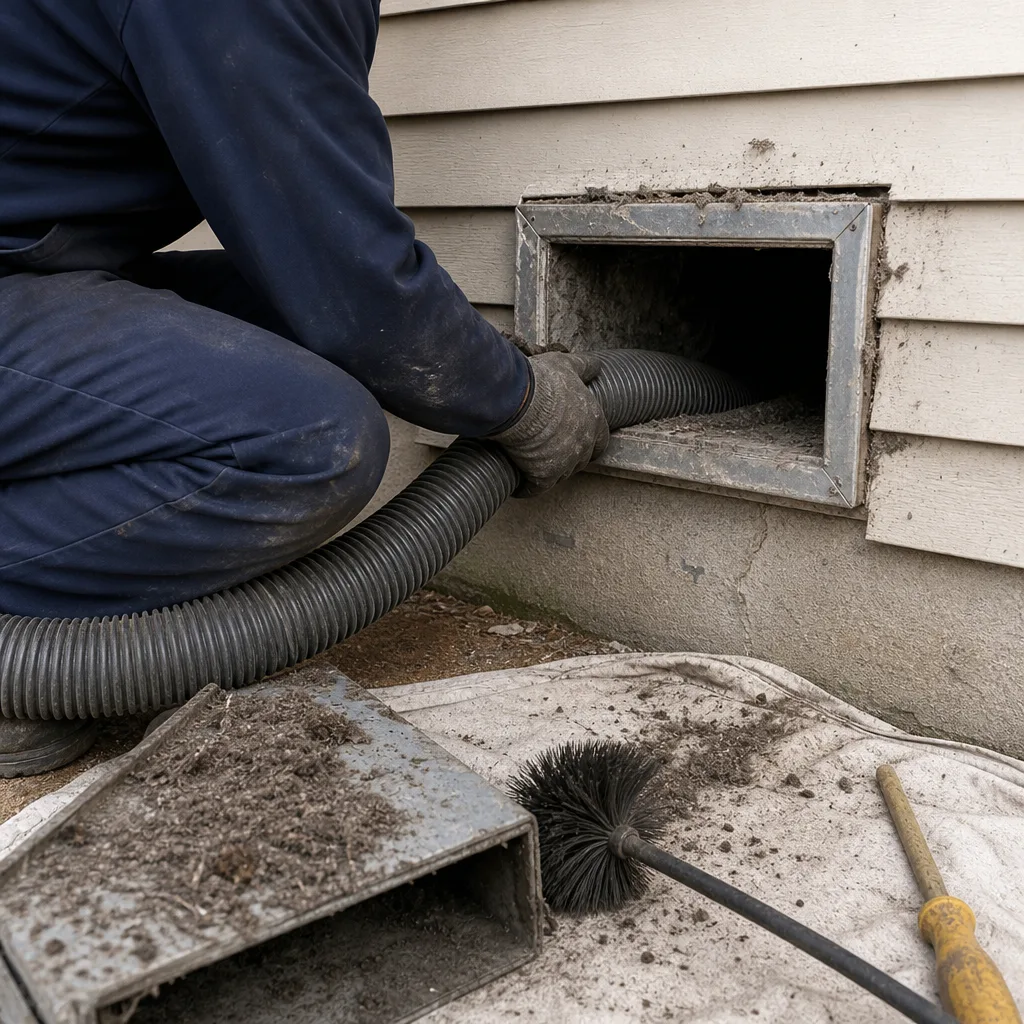 Before
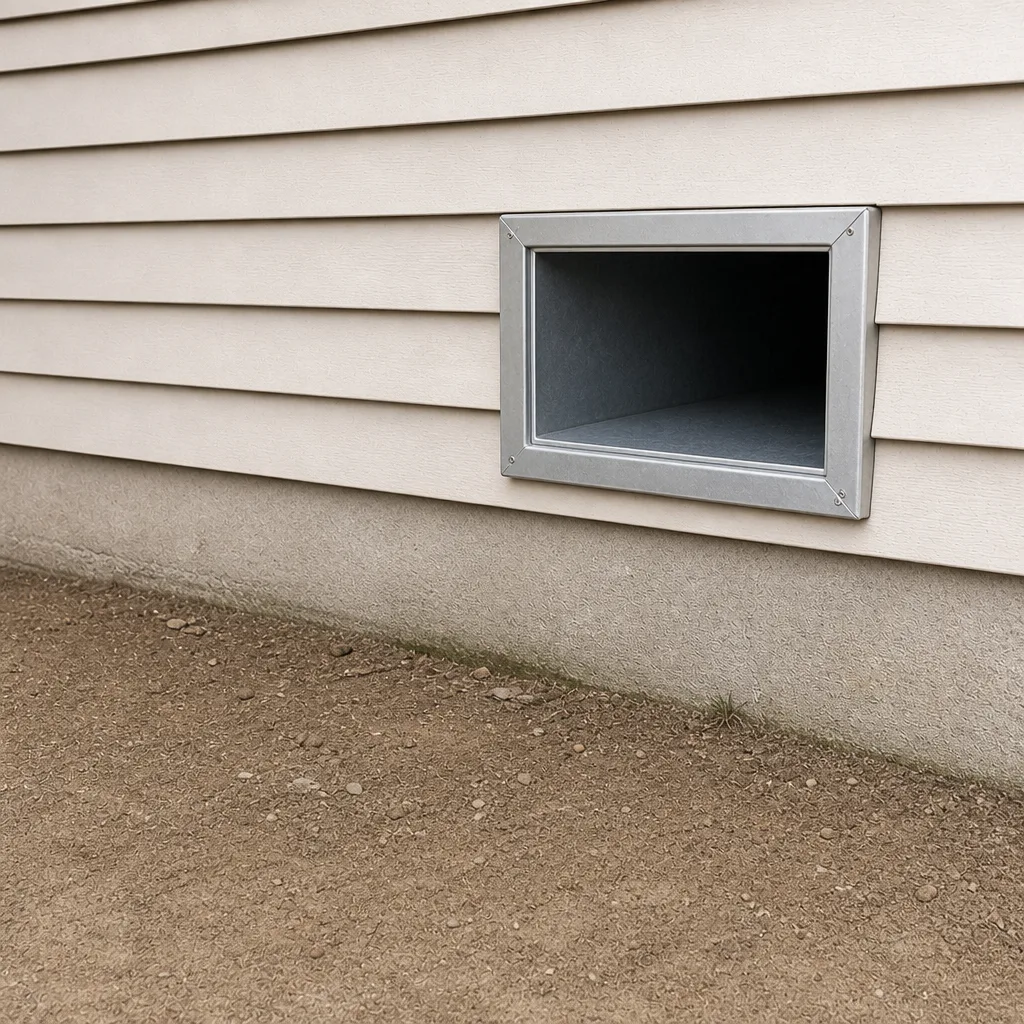 After
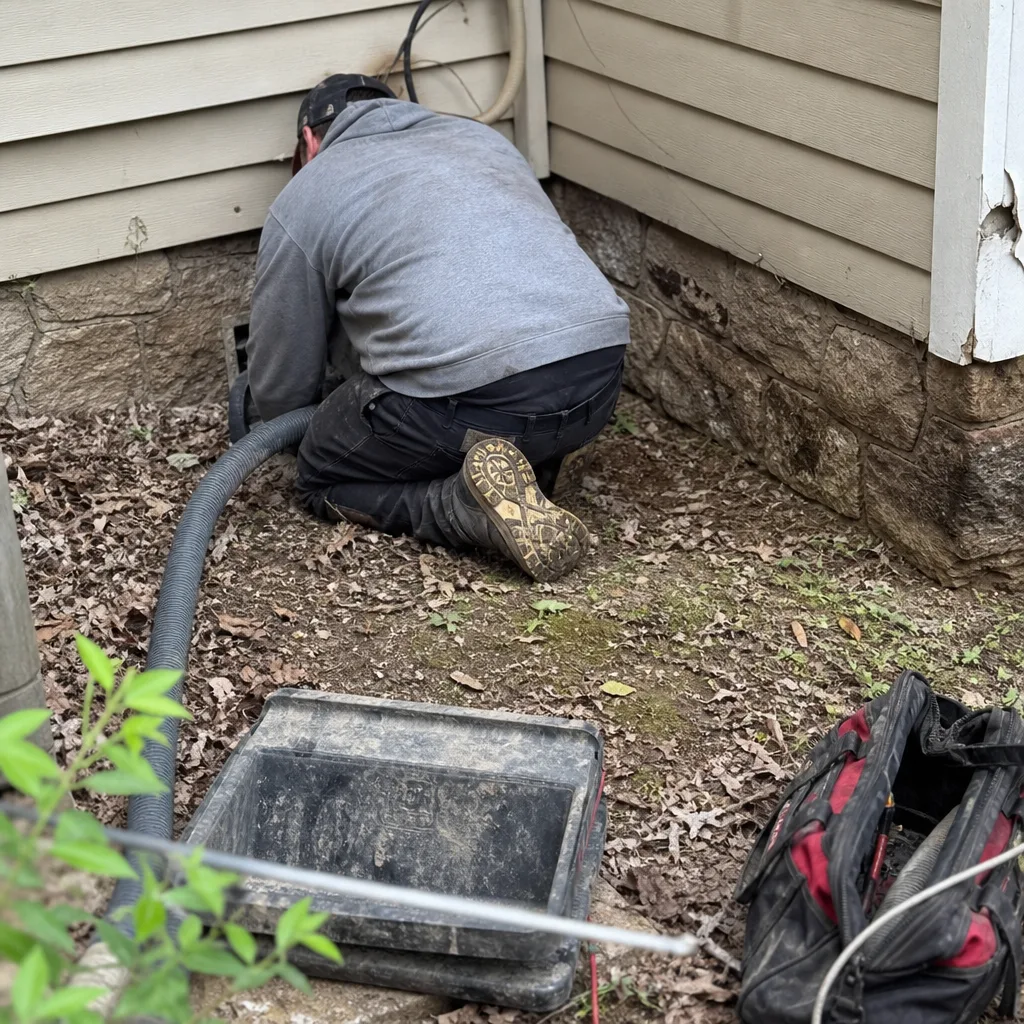 Before
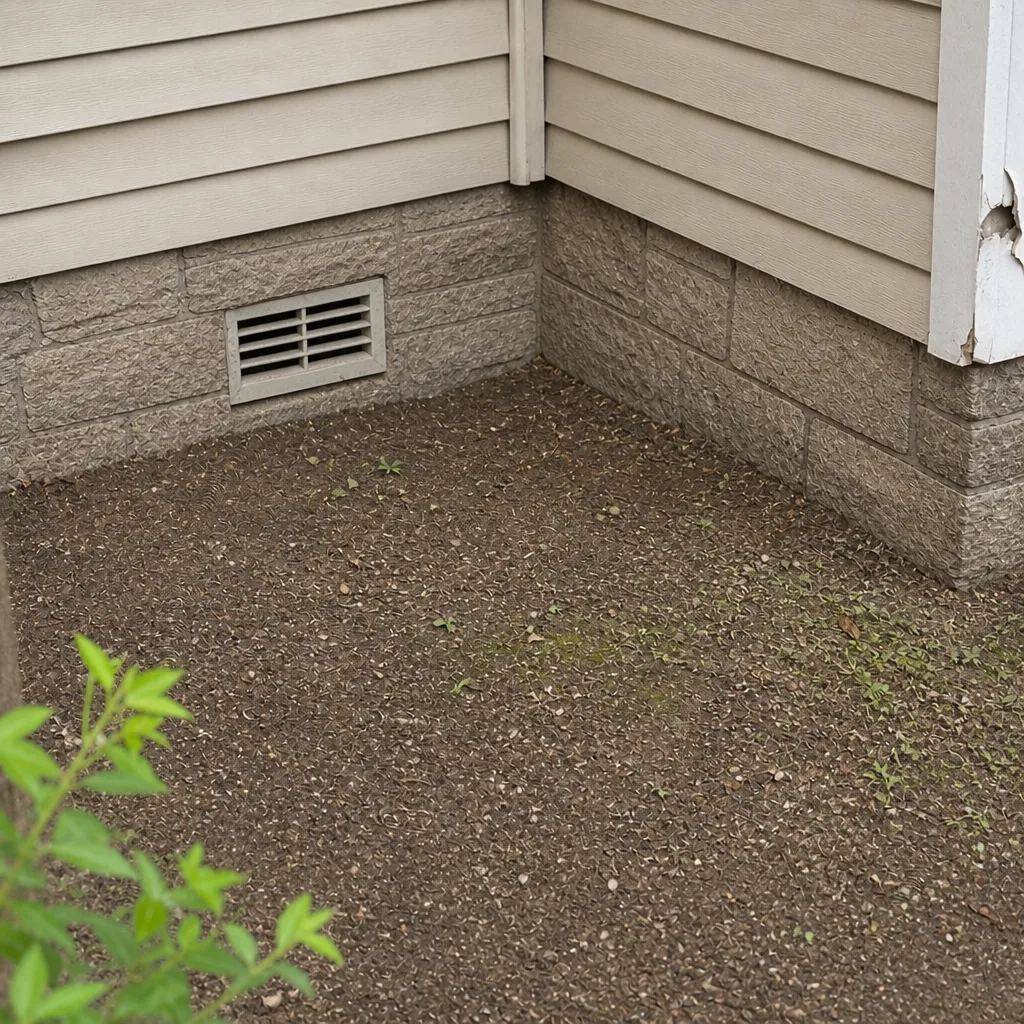 After
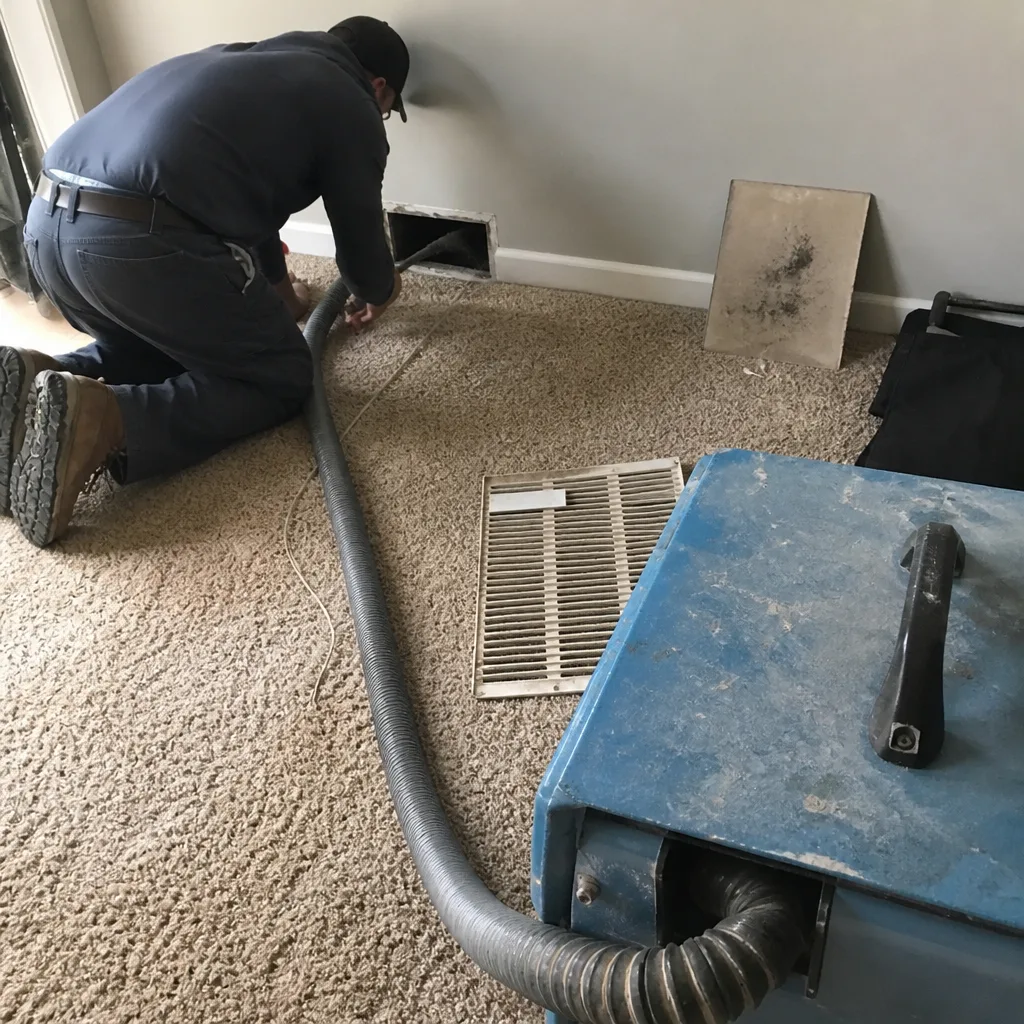 Before
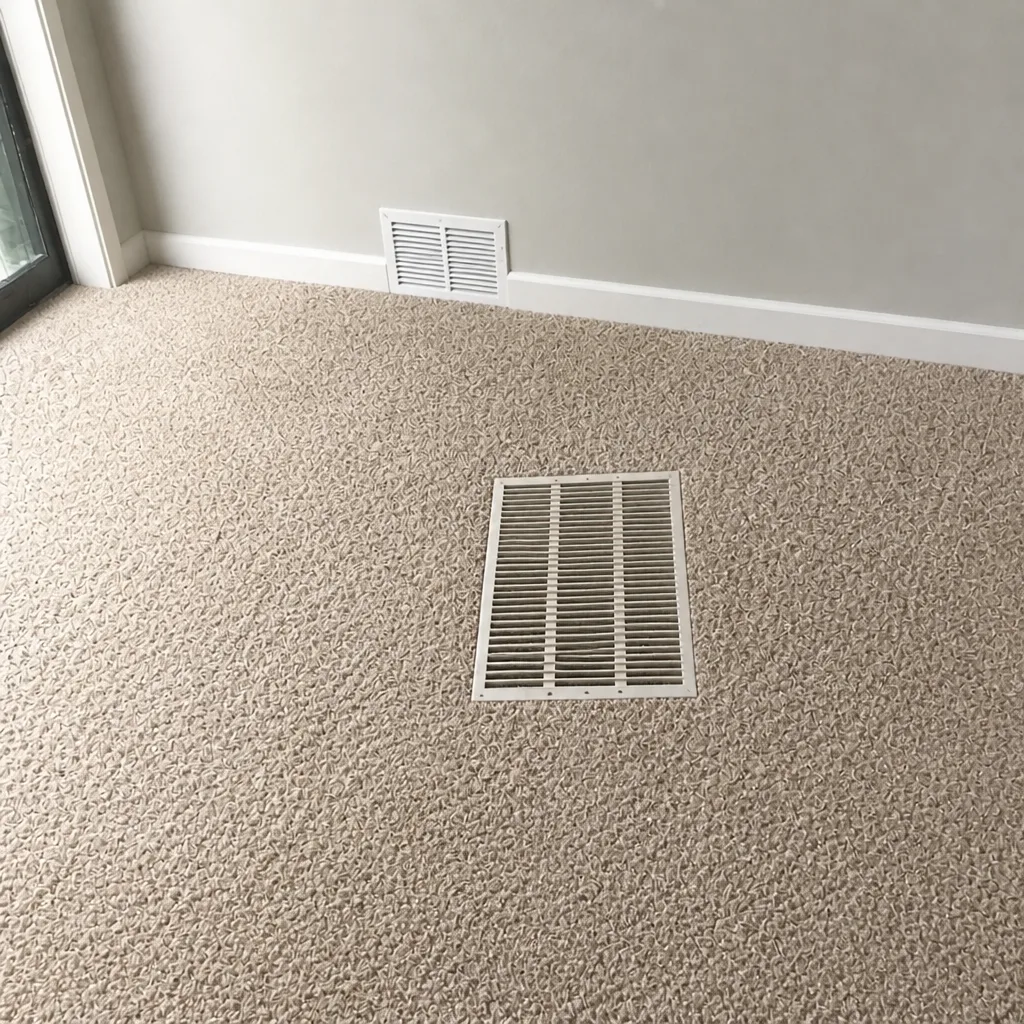 After
Frequently Asked Questions
Cleaning addresses buildup inside ducts that are structurally sound; repair addresses disconnected, crushed, or sealed-out runs. If airflow is weak at specific registers and the duct boots look dusty, it’s cleaning. If airflow is weak or absent at one room with good static pressure elsewhere, or if you can feel air escaping at a joint, it’s repair. A technician looking at the accessible joints and feeling flow at each register can usually tell you which within the first visit. Call (833) 519-7736 for a free estimate.
Because the ducts are picking up moisture from somewhere else, most often the crawl space. Clarksville’s clay-heavy soil traps water, and a torn or thin vapor barrier lets ground moisture rise into the crawl space year-round. Ducts in that space absorb the smell. Cleaning removes what’s already there, but new moisture keeps feeding it back in. The fix needs a proper vapor barrier and moisture control before the smell stays gone. Call (833) 519-7736 to walk through the crawl space with a technician.
Yes, for locating the restriction, not for measuring pressure. A bill that flutters lightly at every register means flow is roughly even and probably acceptable. Weak flutter at one register and strong at the rest points to a branch problem behind that room. Weak flutter at every register points to the air handler, trunk, filter, or coil. It’s the pattern that tells you where to look, and a technician can confirm the diagnosis once on site. Call (833) 519-7736 for a free estimate.
Usually, yes. Drywall dust, sawdust, and construction debris settle into ducts and the air handler during a remodel, and regular filtration won’t clear it. Cleaning after construction is one of the most common reasons homeowners call us. Waiting too long lets fine particles load the evaporator coil and settle into the carpet and furniture. Call (833) 519-7736 and we’ll check what the renovation left behind.
Every 12 to 18 months for most households, and more often if you have a long vent run, several elbows, or a large family doing lots of laundry. Long runs and crushed flexible connections behind the dryer clog fastest, and the interior of the duct can get hot enough to ignite lint before the dryer shows any drying difficulty. Call (833) 519-7736 to schedule a dryer vent cleaning before the risk gets higher.
The soil and the housing stock. Clay-heavy ground means more crawl space moisture, and more homes here have flex duct run in damp crawl spaces than in areas with sandy or drainable soil. That combination makes vapor barrier inspection part of the job, not an upsell. Duct Cleaning Clarksville covers Clarksville and the surrounding area with professional-grade Rotobrush and Nikro equipment and can handle the moisture-driven issues the local soil creates. Call (833) 519-7736 for a free estimate.
The Bottom Line
Most duct complaints in Clarksville come down to a short list of causes: dust and buildup, disconnected or crushed runs, moisture from the crawl space, or an HVAC problem the ducts didn’t cause. The order of diagnosis matters more than the equipment does. Change the filter, run the dollar bill test, look at what’s accessible, and only then decide whether the answer is cleaning, sealing, repair, or an HVAC contractor. Getting that order right is how you avoid paying for the wrong service. When you’re ready for a professional look, our team at Duct Cleaning Clarksville is set up to clean, repair, and address air quality in one visit. Call (833) 519-7736 for a free estimate. Our technicians have up to 13 years of experience.
Written by the team at Duct Cleaning Clarksville.