
Last updated November 15, 2026
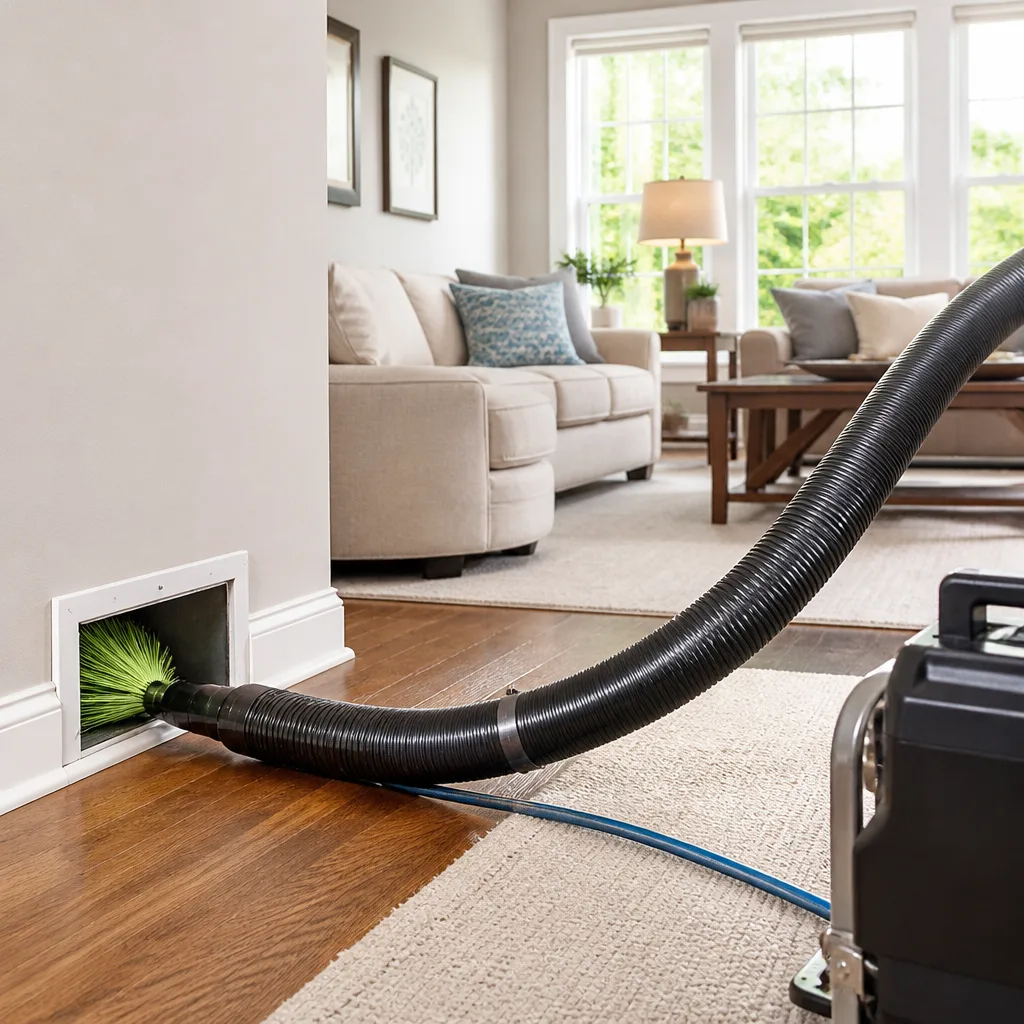 Whole-home duct cleaning
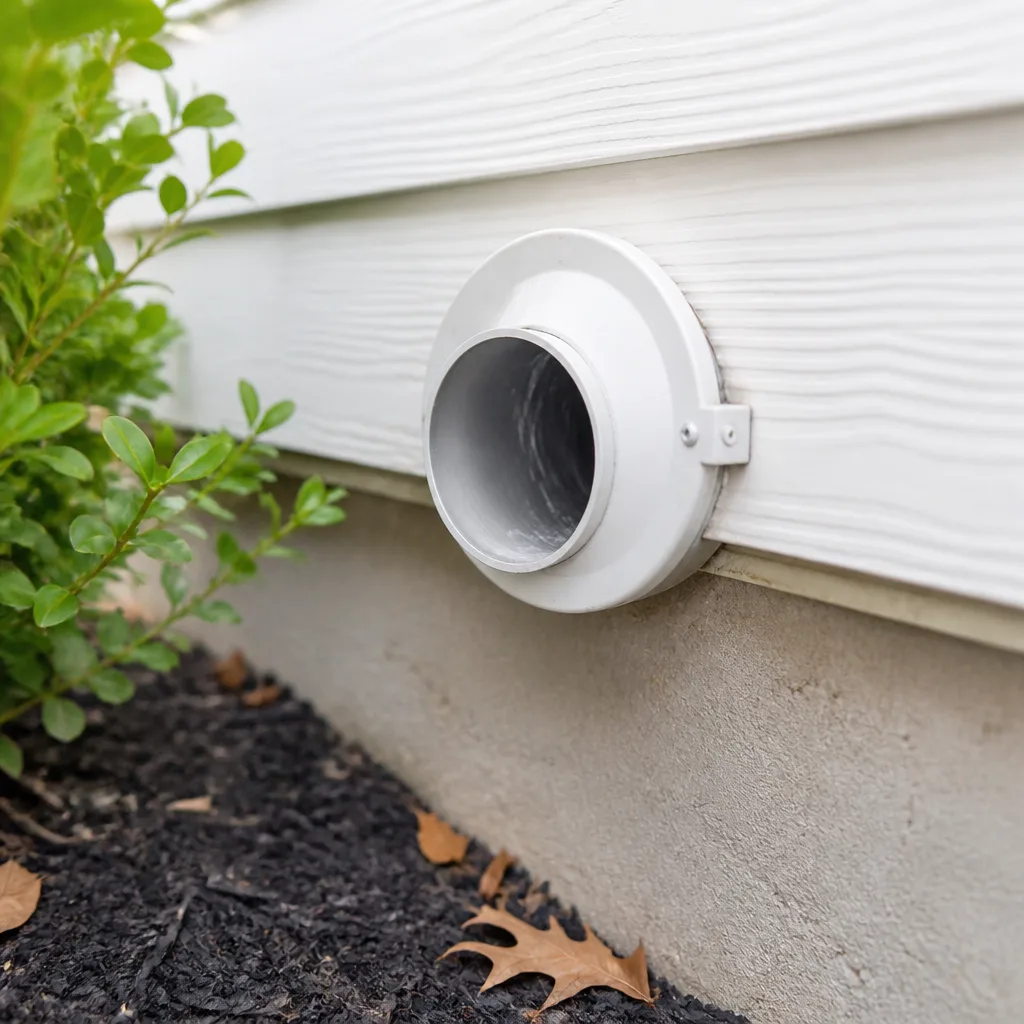 Dryer vent cleaning
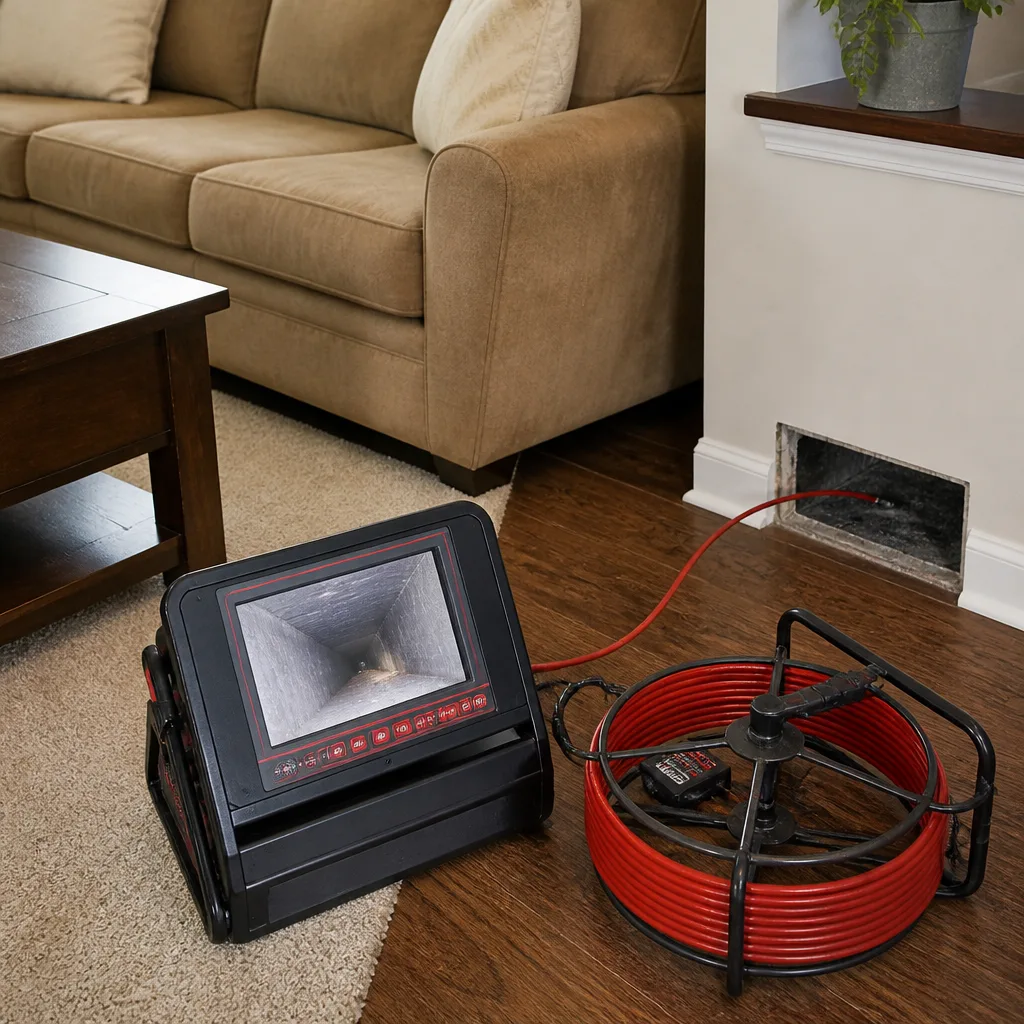 Camera inspection
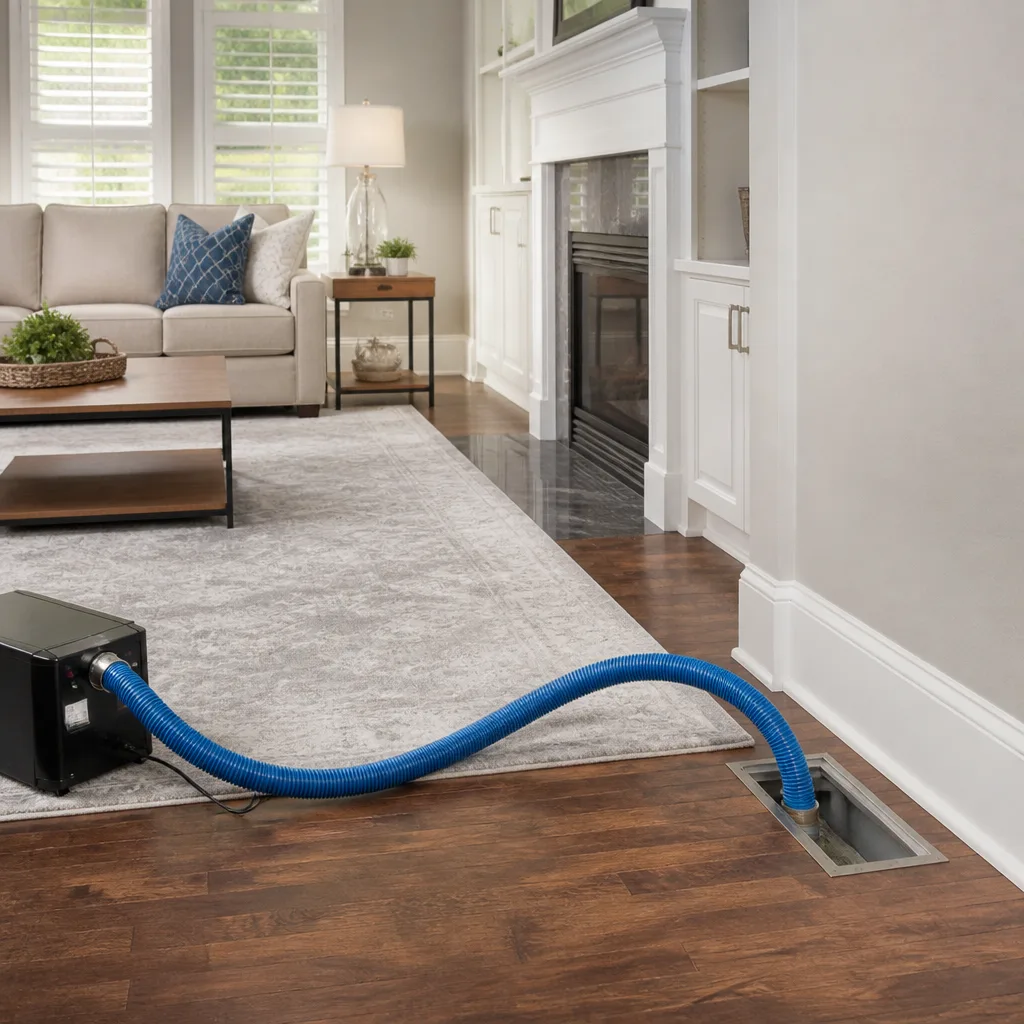 Sanitizing & deodorizing
Whole-system duct and dryer vent check with before-and-after photos - you see exactly what came out of your vents
That "$99 whole-house special" is a bait ad - the real number appears once they are in your hallway, or the "clean" is a shop-vac at the register. We photograph the inside of your ducts before and after instead.
Air Duct Cleaning Maintenance Schedule: What to Do and When
The advice you’ll find everywhere says to clean your air ducts every three to five years, and that’s a reasonable starting point. But it was written for a median American home, not for a Fort Campbell household running the HVAC ten months out of the year in humid air, with two dogs and fiberglass batt insulation overhead in the attic. Interval recommendations ignore the variables that actually drive contamination: pets, renovation dust, runtime hours, and filter grade. This guide replaces the fixed number with a framework you can apply to your own household in Clarksville, plus a month-by-month calendar, so you know when to act and when to wait.
Quick Answer
For most homes in Clarksville, air ducts need professional cleaning every three to five years, but the right interval for your house depends on pets, recent renovations, annual HVAC runtime, and filter grade. A household with two or more pets or a recent renovation should plan on cleaning closer to every two to three years, while a low-pet, no-renovation home with good filtration can usually stretch to five or six. Between professional cleanings, change filters on schedule and keep registers clear.
Styles & brands we work with
- Whole-home duct cleaning
- Dryer vent cleaning
- Camera inspection
- Sanitizing & deodorizing
Table of Contents
- Why the Generic 3-to-5-Year Rule Doesn’t Fit Every Home
- How to Calculate Your Home’s Real Cleaning Interval
- A Month-by-Month Duct Maintenance Calendar for Middle Tennessee
- What You Can Do Yourself vs. What Needs Professional Equipment
- How to Document Duct Condition Over Time
- The Cost of Skipping a Scheduled Cleaning
- Dryer Vent Cleaning on Its Own Schedule
- When Cleaning Reveals a Repair Problem
Why the Generic 3-to-5-Year Rule Doesn’t Fit Every Home
The three-to-five-year guideline comes from industry consensus about the average American home, and on average it’s right. What it can’t account for is how different two houses on the same street in Clarksville can be. One might be a newer build on a slab with a well-sealed duct system and a whole-home filter. The next door over could be a 1970s home with flex duct running through a vented crawlspace, two cats, and a filter that hasn’t been changed since spring. The contamination load on those two systems isn’t close, and neither should be the cleaning schedule.
What actually drives how fast a duct system loads up:
- Pets. Dander and hair are fine particulate that sails past standard filters and settles on duct walls. Two shedding pets can cut a normal interval roughly in half.
- Renovation dust. Drywall sanding, cutting, and demolition push gypsum and wood dust into the return side of the system. A single major renovation can put more debris in your ducts than five years of normal living.
- Runtime hours. The blower moves a volume of air proportional to how long it runs. In Middle Tennessee, the cooling season is long, and homes here typically run the system around ten months of the year. More runtime means more opportunities for particulate to deposit.
- Filter grade. A cheap fiberglass filter catches the big stuff and passes the fine stuff straight to your coil and duct walls. A pleated MERV 8 to MERV 11 filter catches substantially more, and a whole-home Honeywell or Aprilaire filtration system catches more again.
- Duct construction. Flex duct with sagging runs and unsealed joints collects more than rigid metal with taped seams. Attic runs in a hot, humid climate are also more prone to condensation issues.
In our experience working in Clarksville, the households that call us because of allergies or visible dust almost always have at least two of the factors above stacked together. The interval you actually need isn’t a number pulled off a website. It’s your number, and it’s worth calculating once so you can plan around it.
How to Calculate Your Home’s Real Cleaning Interval
You can estimate your own cleaning interval in about five minutes by starting from the five-year baseline and adjusting from there. This isn’t a substitute for a professional inspection, but it gives you a defensible schedule that reflects your household instead of a national average.
- Start at five years. This is a slightly conservative baseline for a typical home with no pets, no recent renovation, and a pleated filter.
- Subtract a year for each pet. Two dogs or cats means subtracting two years, putting you at three. Three or more pets generally means planning on professional cleaning every two to three years.
- Subtract two years if you’ve renovated in the last 24 months. Drywall and framing dust loads the system heavily and often doesn’t clear on its own.
- Subtract one year if your system runs more than ten months a year. In Clarksville, that’s most homes, since our cooling season starts early and our heating season runs deep into the shoulder months.
- Subtract a year if you use a fiberglass or low-MERV filter. Add a year back if you run a MERV 11 or better, or a whole-home Honeywell or Aprilaire filtration system with clean media.
- Floor the result at two years. Below two years, there’s rarely enough accumulation to justify a full cleaning unless you’re managing allergies, mold, or a specific contamination event.
- Add a year if you last had the system professionally cleaned and sealed. Clean, sealed ducts stay clean longer, because gaps that pull air in from attics and crawlspaces are the main path for new contamination.
The math isn’t perfect, but it’s more useful than a fixed interval. A Clarksville household with two dogs, a 2023 renovation, and a standard pleated filter lands at around two years. A retired couple in a well-sealed newer home with one cat and a whole-home filtration system might comfortably go five to six. Same zip code, different schedules, both correct.
A Month-by-Month Duct Maintenance Calendar for Middle Tennessee
Our climate drives the maintenance calendar more than most homeowners realize. Clarksville sees long, humid summers, a genuine pollen season in spring, and winters cold enough to matter for condensation in ductwork running through cooler spaces. Working the schedule around those seasons makes a real difference, and none of it requires special tools.
January – February: This is the season to check crawlspace vapor barriers and insulation, because the ground is at its coolest and condensation risk is highest on duct runs in cool spaces. Look for wicking, damp insulation, or standing water. Replace the filter if it’s been more than 60 days since the last swap. If you’re planning a spring renovation, now is the time to talk to us about a post-renovation cleaning.
March – April: Swap filters before pollen season peaks. The blower pulls air through the return between your living space and the filter, and during high-pollen weeks the load on that filter jumps noticeably. If you run a whole-home system, check the media on your Honeywell or Aprilaire unit now.
May – June: Inspect duct runs in the attic and crawlspace for condensation. In our humid summers, improperly sealed runs in unconditioned spaces sweat. This is also the right window to schedule professional air duct cleaning if your interval lands on this year, before the peak cooling load hits.
July – August: Peak cooling season. Change filters on schedule and check registers for visible dust. If your system is struggling, restricted airflow from a partially clogged return can look like a failing blower. A technician can tell the difference.
September – October: Pre-heating-season inspection. Walk the duct runs, check every register, and note any gaps, crushed flex, or disconnected joints. This is the ideal window to schedule any duct repair before cold weather arrives.
November – December: Heating season starts, and dryer vents see heavy use for winter laundry. Have your dryer vent cleaned now if you haven’t done it in the past year. Also check that crawlspace vapor barriers haven’t shifted with the season, since damp winter air is when moisture problems in duct systems first show.
Posting this calendar somewhere visible – the inside of a cabinet door, the side of the air handler – makes it far more likely to actually get followed. Our technicians have up to 13 years of experience keeping systems in this climate, and a schedule that follows the seasons is a schedule that sticks.
What You Can Do Yourself vs. What Needs Professional Equipment
A lot of duct maintenance is homeowner work, and we’re direct about it when someone calls asking for a cleaning that doesn’t need to happen yet. Other tasks genuinely need the equipment. Knowing which is which saves both money and frustration.
What homeowners can handle
- Filter changes. The most important thing you can do between cleanings. Swap on the schedule the filter manufacturer specifies, and don’t stretch the interval because the filter “looks fine.”
- Register and grille cleaning. Vacuum removable registers with a brush attachment, and wipe down the grille faces. Dust accumulates on the supply side, and it’s easy to knock back in.
- Visual inspection of accessible flex duct. Look for crushed runs, kinked or sagging sections, and disconnected joints. Take a photo anytime something looks wrong so you can compare it later.
- Return filter grille check. If you have a filter grille at the return, confirm the filter is seated properly and the gasket isn’t torn.
What requires professional equipment
- Source removal cleaning. A vacuum at the register can’t lift deposits clinging to duct walls deep inside a run. Professional-grade systems like the Rotobrush and Nikro platforms use agitation tools plus high-volume negative pressure, and the access cutting and resealing alone requires training.
- Negative air machines and containment. When we clean, the goal is to put airborne particulate under negative pressure before we disturb anything. A truck-mounted negative air machine does that; a shop vac doesn’t.
- Air quality remediation. For contamination situations – post-fire, post-water-damage, or chronic humidity issues – Abatement Technologies equipment handles the strong filtration needed, which is beyond any consumer setup.
- Sealing and repairs. If the cleaning reveals cracks, gaps, or disconnected duct, that’s repair work. Our Duct Cleaning Clarksville team handles both, so a customer doesn’t need to call a second contractor to fix what cleaning exposes.
If you’re not sure which side of the line a problem falls on, describe what you’re seeing. We’ll tell you honestly whether it’s a homeowner task or needs a professional visit.
How to Document Duct Condition Over Time
One habit separates homeowners who keep a system healthy from ones who find out during an emergency: documentation. A simple photo log at each access point takes five minutes and pays off in every future decision you make about the system.
- Identify your access points. Most home systems have at least one register or return near the air handler, and often one at the far end of the longest run. These are your reference points.
- Photograph each access point at the same distance and angle. Keep the frame consistent – same zoom, same position – so before-and-after comparisons are meaningful. A photo taken a foot closer than the last one tells you nothing.
- Note the date and filter grade. Write the date, filter MERV number, and any recent household changes (new pets, renovation, water intrusion) next to each photo.
- Request before-and-after photos of your own ducts from your cleaning company. A professional service should be able to show what changed inside your system, not just the outside of a register. Without that, you have no way to verify the work was actually done.
- Compare annually. Pull up your photos each fall and compare. Accumulation visible at a register over a single year is your own data that the interval should be shortened.
We photograph before and after at every clean, and we’re glad to have you look at those photos before anything is signed off. That’s how you know the work was actually done, not assumed.
The Cost of Skipping a Scheduled Cleaning
Skipping a cleaning doesn’t produce a visible problem on the day you skip it. It shows up months or years later, and always in one of three places: the coil, the blower, or the ductwork itself.
The mechanism is straightforward. Particulate that deposits on duct walls also deposits on the evaporator coil, on the blower wheel, and on the secondary heat exchanger. A fouled coil loses heat-transfer efficiency, and every additional gram of dust on that coil makes the compressor work harder to reach the same temperature. ASHRAE has documented the efficiency loss from coil fouling across decades of study, and while the exact percentage depends on the system, the effect compounds over time. Homes that skip cleanings eventually pay for it twice: once in higher energy bills, and again when a coil that could have been cleaned needs replacement.
There’s a second cost that doesn’t show up on a bill. Duct systems that pull from unconditioned spaces – crawlspaces, attics – don’t just move conditioned air. Gaps and disconnected flex draw in whatever’s outside the duct. That’s fine if the outside is clean. When a crawlspace vapor barrier is failing or attic insulation is disturbed, the system distributes the result to every room in the house. That path is worth closing with a duct repair as soon as it’s identified.
The third cost is one you can’t see at all: the deposits you’re breathing. That’s not a scare line. It’s the whole reason the industry has a professional standard for source removal. Clean ducts don’t just save energy – they deliver better air, and they let a whole-home filtration system like Honeywell or Aprilaire actually do its job, because filtration only works when the system is already reasonably clean. Better air starts with clean ducts.
Dryer Vent Cleaning on Its Own Schedule
Your dryer vent isn’t part of the HVAC system, but it deserves its own spot on the maintenance calendar, and it’s the schedule item most households skip entirely. Lint accumulates in the vent run, and hot dryer exhaust plus a blocked vent is the leading cause of residential dryer fires. Our dryer vent cleaning is a dedicated service, not an upsell after the duct job is done.
The schedule rule of thumb: have the dryer vent cleaned once a year for a typical household, more often if you run four or more loads a week, have a long vent run, or have a vent with multiple elbows. Signs you’re overdue include clothes that take longer than expected to dry, a hot dryer cabinet, and a visible lint plume around the exterior vent when the dryer runs. If you haven’t had the vent cleaned in a year or more, add it to this month’s list.
Cleaning uses the same professional-grade equipment we bring to duct work, with a rotary brush and vacuum setup that clears lint from the full run rather than just the near end. The vent termination on the roof or wall gets checked too, since a stuck flapper or screen can cause lint to pack in against the outside.
When Cleaning Reveals a Repair Problem
Cleaning often exposes what accumulation was hiding. Runs that looked fine from the register turn out to have crushed flex, disconnected joints, or failed mastic seams. That’s not a reason to panic – it’s a reason to fix it while the system is already open.
A few problems we commonly see when we get into a system:
- Disconnected flex at a takeoff or boot. The run feeds a register, and instead of delivering air it delivers air from the attic or wall cavity. Easy to fix, but expensive if left – the register delivers contaminated air indefinitely.
- Crushed or kinked flex runs. Restricted airflow at one register can mislead a homeowner into thinking the system is undersized. It’s often a duct problem, not an equipment problem.
- Failed mastic and tape at seams. Seams that were sealed years ago dry out and pull away. Left alone, they leak conditioned air and pull outside air in.
- Duct runs through failing insulation or a compromised vapor barrier. The duct itself may still be sound, but the surrounding conditions are letting moisture into the system.
Duct repair is a service we offer alongside cleaning specifically so this problem gets handled in one visit. If the cleaning reveals something that needs fixing, the repair can be scheduled with the same team that cleaned the system. If you’re in the Clarksville area and want to know whether your system is due, a professional walkthrough takes far less time than a surprise repair.
Common Mistakes to Avoid
- Treating the three-to-five-year interval as fixed. The rule ignores pets, renovation dust, and filter grade, all of which move the number significantly. Compute your own interval using the framework above, and adjust as your household changes.
- Buying the cheapest filter you can find and expecting the ducts to stay clean. Fiberglass filters catch very little of the fine particulate that deposits on duct walls and coils. A MERV 8 to MERV 11 pleated filter catches meaningfully more, and a whole-home Honeywell or Aprilaire system catches more again.
- Booking a cleaning with no photos and no before-and-after record. Any company can show up with a vacuum and a coupon. Ask for before-and-after photos of your own ducts and a copy of the equipment being used. In Clarksville, that single question sorts the professional operators from the ones who aren’t.
- Skipping the dryer vent because the dryer still seems to work. A dryer vent doesn’t fail with a warning. Lint builds slowly, and the fire risk arrives long before drying time noticeably changes. Put it on the yearly schedule.
- Renovating a house and then not touching the ductwork. Drywall dust is the single most common post-renovation duct contamination source. Schedule a cleaning after any significant renovation, ideally before you turn the HVAC back on full-time.
- Assuming a crawlspace problem is separate from the ducts. In Clarksville, crawlspace humidity and duct condition are usually one conversation. A failing vapor barrier affects the ducts that pass through that space regardless of how well the ducts are sealed.
- Ignoring small visible dust plumes at registers. A puff of dust when the system starts is a sign the supply side is loaded. That’s not a filter issue if the filter is fresh – it’s a system cleaning issue.
See the difference
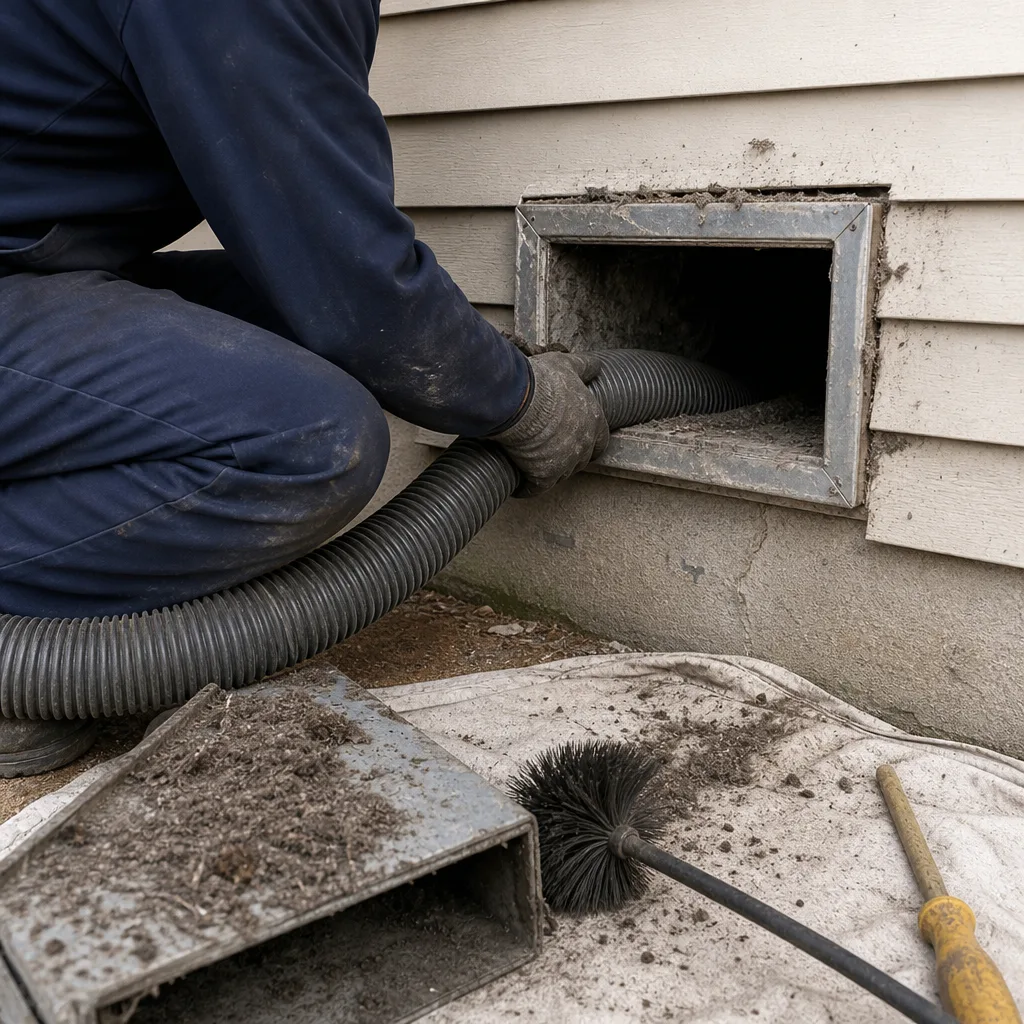 Before
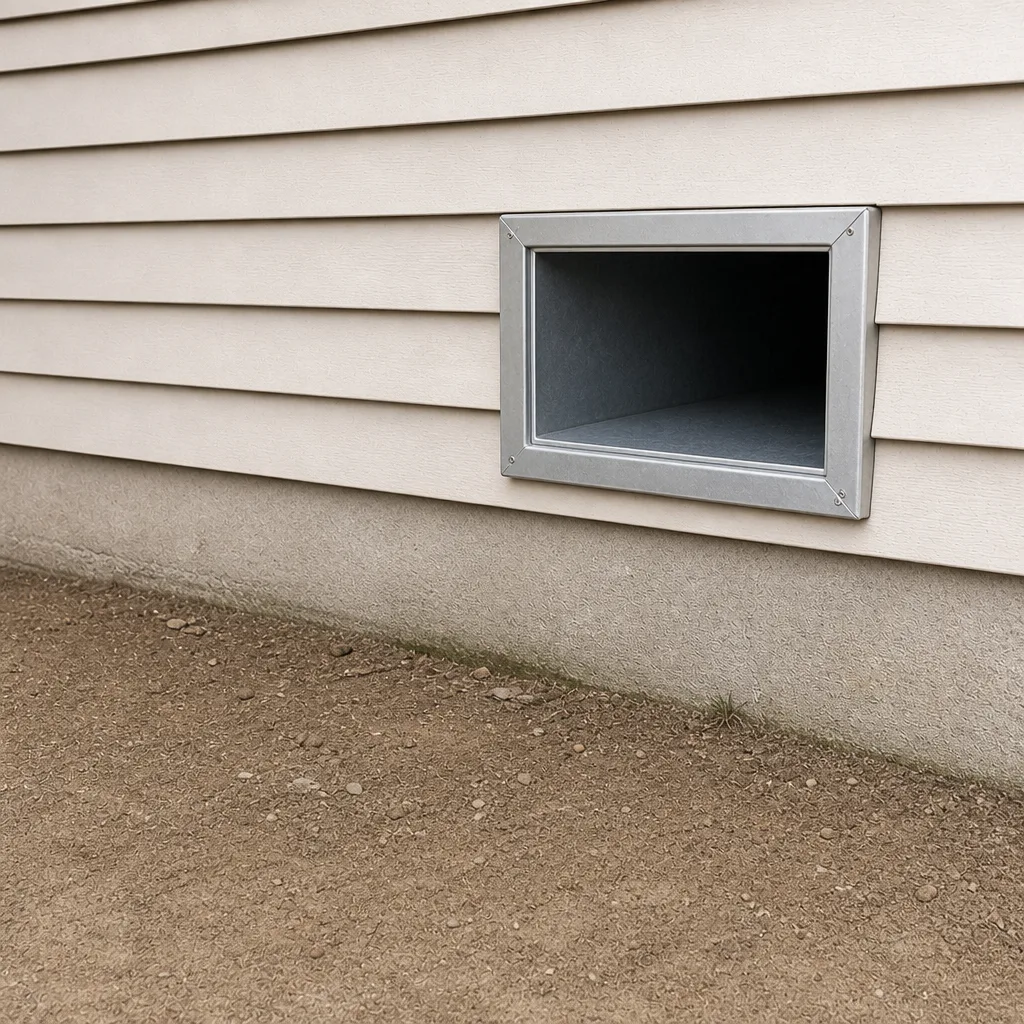 After
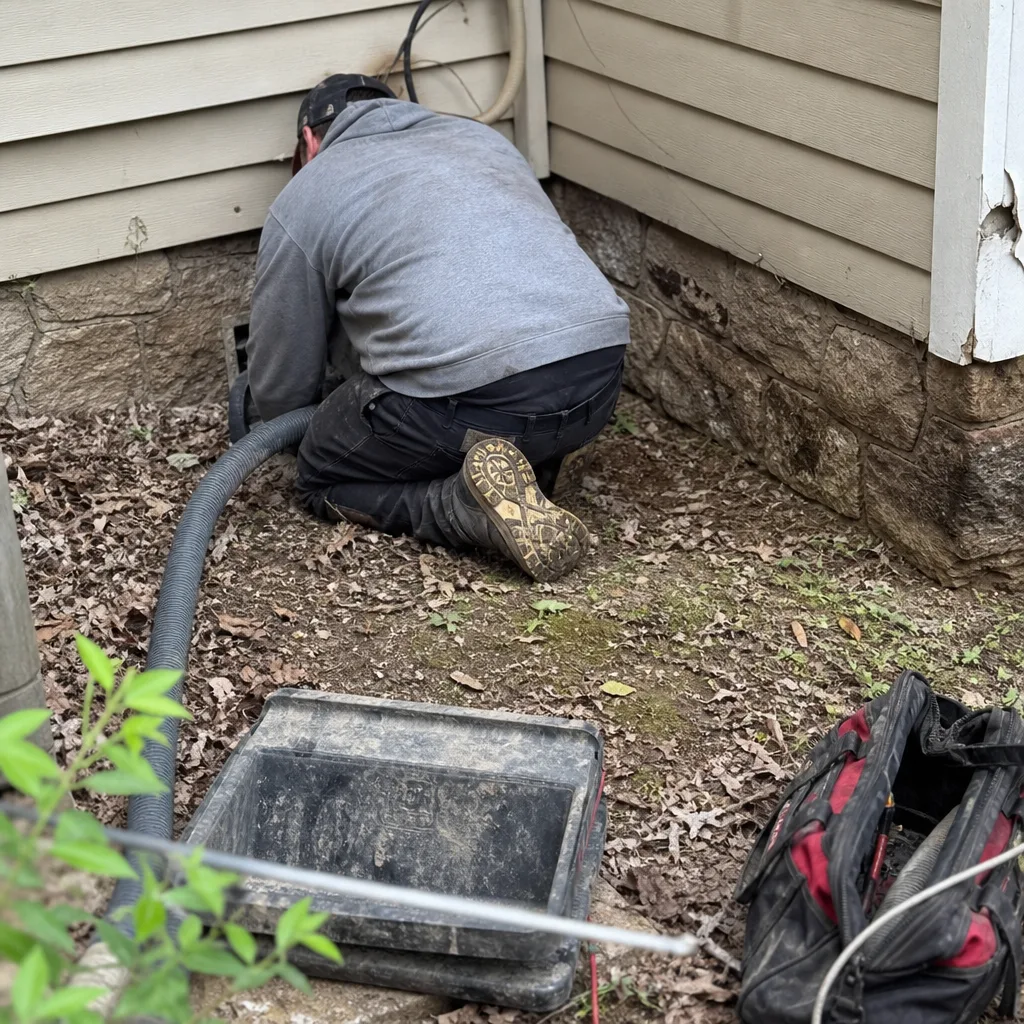 Before
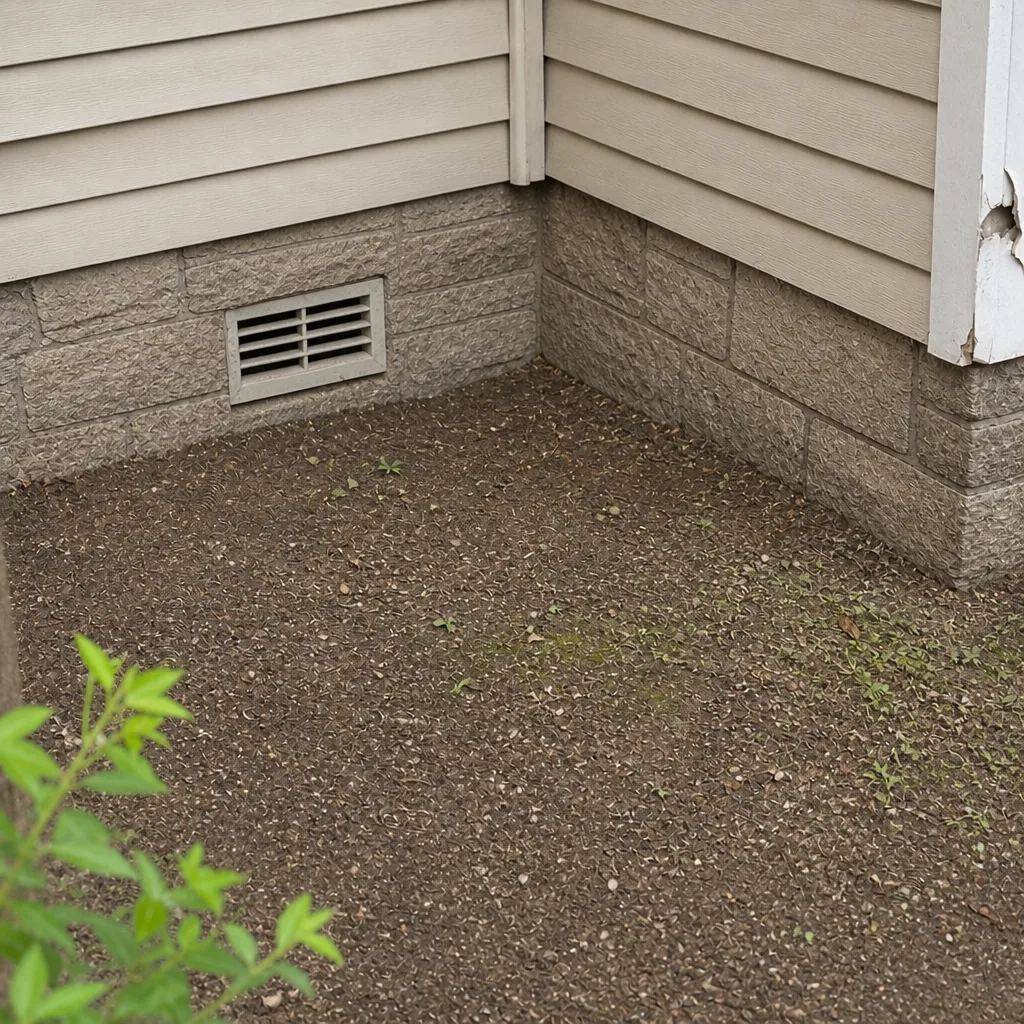 After
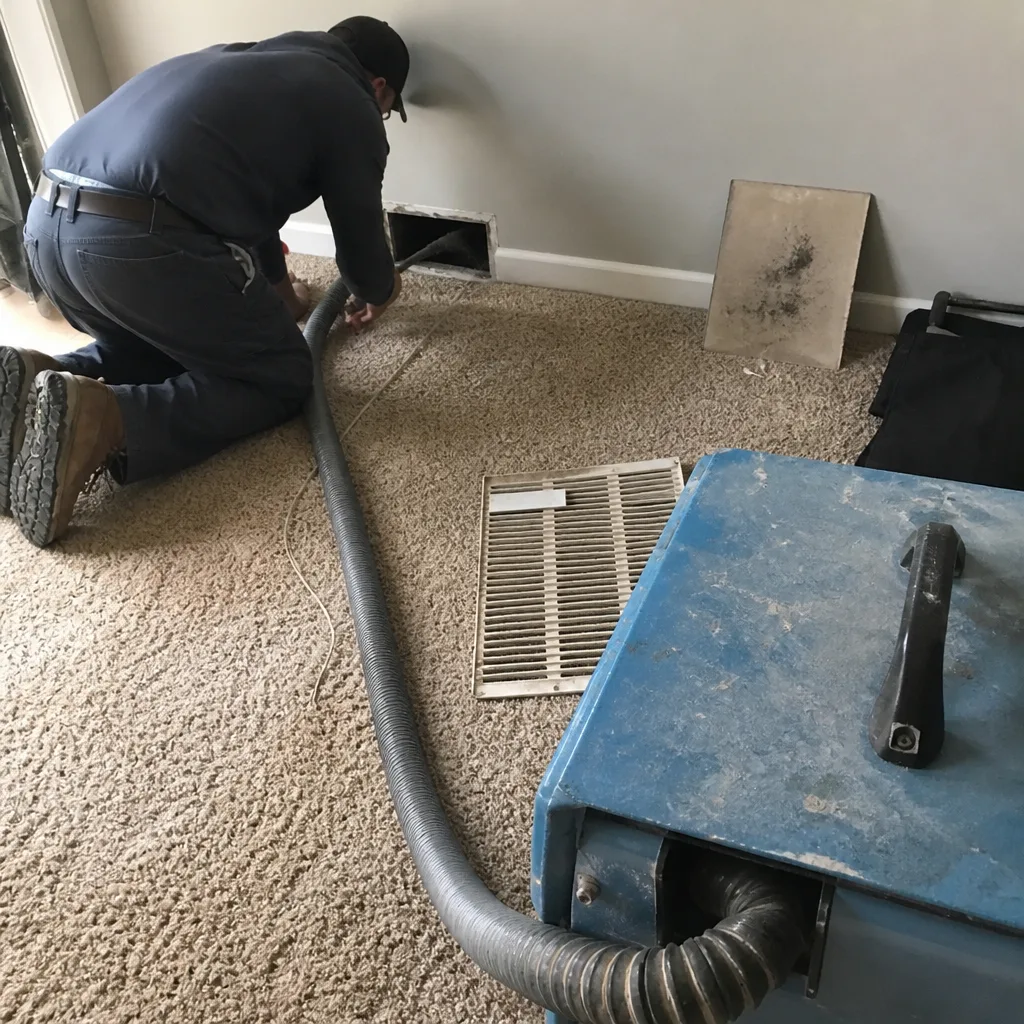 Before
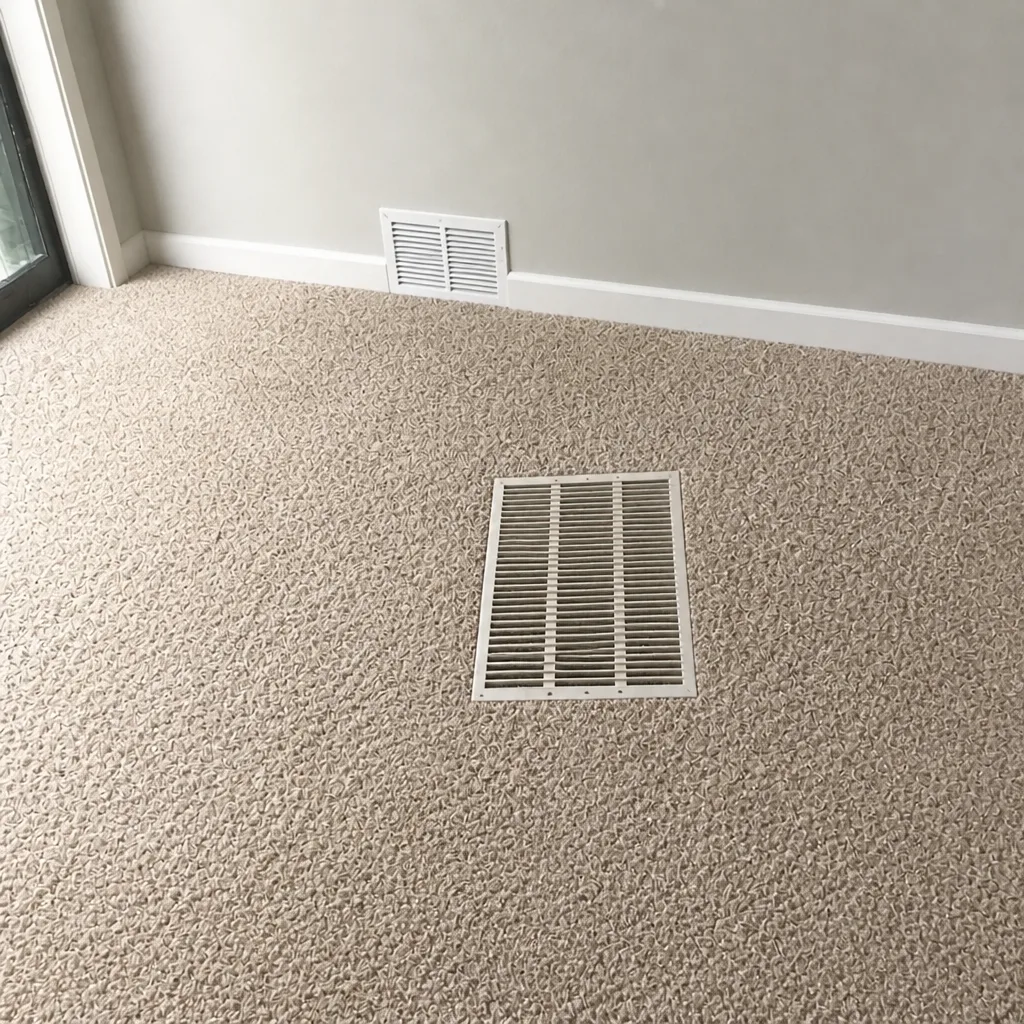 After
When to Call a Professional
Some calls are obvious. Visible dust plumes at registers, a persistent musty smell when the system runs, or recent renovation that pushed drywall dust into the return all justify a professional visit. Allergies that flare inside the home more than outside, even after filter changes, are another signal worth acting on. Persistent moisture in a crawlspace or attic near duct runs should be checked before you clean, since the reason matters.
We field a lot of questions where the honest answer is “wait a year” or “that’s a homeowner task.” Good. Air duct cleaning should be scheduled because your system needs it, not because a coupon arrived in the mail. That’s the whole idea behind the interval framework in this guide: you decide the timing, based on your household, and we make an honest assessment of whether the work is needed.
Duct Cleaning Clarksville offers free estimates. Call (833) 519-7736. We answer 24/7. Fast dispatch from 7am to 7pm, Sunday through Friday.
Frequently Asked Questions
Most homes need professional air duct cleaning every three to five years, though homes with pets, recent renovations, or systems running 10 months a year should plan closer to every two to three years. Use the interval framework in this guide to calculate your specific number. If your last cleaning was more than three years ago and you’re unsure, a free inspection is the safest call. Call (833) 519-7736 for an exact quote. Estimates are free.
Pricing depends on the number of systems, the length and configuration of the ductwork, and whether a duct repair is needed alongside cleaning. We set one flat price per system after a walkthrough, and the written estimate is the final price. There’s no per-vent charge and no coupon price that grows once the technician is on site. Call (833) 519-7736 for an exact quote. Estimates are free.
Cheap quotes usually reflect what’s not included: professional-grade equipment, negative air containment, and before-and-after documentation. A handheld vacuum at the register and a low coupon price can look like a bargain on paper, but it doesn’t remove the deposits on duct walls, and it’s invisible once the technician leaves. Ask what equipment is being used and whether you’ll receive photos of your own ducts. Call (833) 519-7736 if you want those answers in writing before you book.
Before-and-after photos at each access point are the single most useful check. A professional cleaning should produce visible change at the reference points you inspected before the visit, plus a written record of any repairs performed. If a company can’t show you before-and-after images of your own system, that’s the answer to your question. Call (833) 519-7736 for a free estimate where the scope is spelled out in writing.
Yes. Long humid summers in Middle Tennessee mean duct runs through attics and crawlspaces are more prone to condensation, which can lead to moisture retention in insulation and dust that sticks rather than blows through. Homes here also tend to run the HVAC longer across the year, which increases airflow and the amount of particulate that deposits on duct walls. Checking condensation on duct runs in late spring and fall is part of the annual schedule for a reason. Call (833) 519-7736 for a free inspection if you suspect moisture.
Yes, and filter grade is the biggest lever. Switching from a fiberglass filter to a MERV 8 to MERV 11 pleated filter catches far more fine particulate before it reaches the duct walls, and a whole-home filtration system like Honeywell or Aprilaire catches more again. Changing filters on schedule, vacuuming registers periodically, and inspecting accessible flex duct for damage all help. For heavier jobs like source removal cleaning and duct repair, our Clarksville team handles the equipment side. Call (833) 519-7736 for a free estimate.
The Bottom Line
The right cleaning interval for your home isn’t a fixed number, and it’s not the one your neighbor uses either. Start at five years, subtract for pets, renovation, runtime hours, and low-grade filters, and adjust annually based on what you see in your own photos. Work the maintenance calendar around Clarksville’s seasons, handle the homeowner tasks between visits, and treat dryer vent cleaning as an annual requirement rather than an add-on. When the system does need professional work, use a company that shows you before-and-after photos and prices the job per system. Clean ducts protect the coil, the air you breathe, and the equipment you paid for. Call (833) 519-7736 for a free estimate.
Written by the team at Duct Cleaning Clarksville.